
Fairhope's Tap Water Is Soft: 30.8 mg/L, pH 7.48, From the City's Own Report
Filter-company pages describe Fairhope's water as mineral-heavy. Fairhope Public Utilities' own published water quality data puts hardness at 30.8 mg/L and finished pH at 7.48. What the record establishes, where it contradicts itself, and the three things it cannot settle about your house.
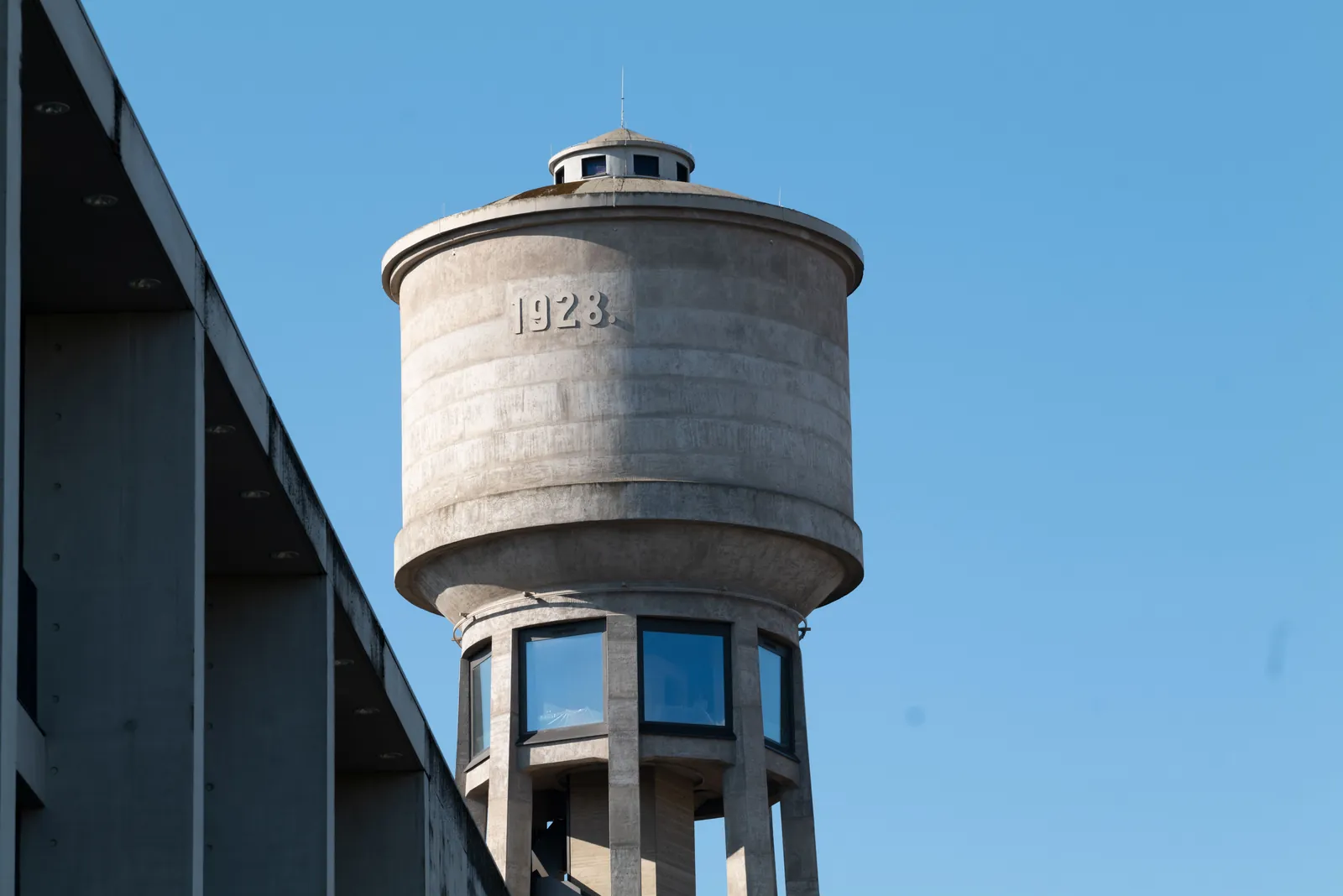
Search for Fairhope's water quality and you will find pages describing it as mineral-heavy, most of them selling softeners. Fairhope Public Utilities publishes its own numbers, and they say the opposite: total hardness 30.8 mg/L — about 1.8 grains per gallon — and finished water at pH 7.48. That is soft water on any standard scale. Here is what else the record establishes, one place where it contradicts itself, and the three things it cannot settle about your house.
The hardness number, and who is wrong about it
30.8 mg/L is roughly 1.8 grains per gallon, and every conventional scale calls anything under about 3.5 grains soft. Two figures in the same report agree: total dissolved solids average 68 mg/L, total alkalinity 21.3 mg/L.
So the softener premise is false here, and that changes what you should worry about. Scale is not the thing taking out your fixtures in this city. A water heater on a soft supply does not fill with the rock northern content describes — what comes out of one here looks different, which is the subject of flushing a water heater in a soft-water county. If a fixture is failing, hard water belongs near the bottom of the suspect list.
Raw 5.90, finished 7.48 — the treatment is visible in the numbers
The most-quoted water figure in this county is a pH of 5.90. It is real and it is not your tap water.
That 5.90 is the median across 248 raw well samples from the Water Quality Portal, drawn straight out of the ground across Baldwin County, with 79% below neutral and 67% below the EPA secondary minimum of 6.5. Fairhope's finished water is reported at 7.48.
The published treatment process explains the gap, in order: pre-aeration to reduce carbon dioxide and assist iron and manganese removal, a contact basin, chlorine, fluoride, then hydrated lime to adjust pH and minimize corrosion within pipes and plumbing, then liquid polyphosphate, then high-service pumps to distribution. The lime and the polyphosphate are the corrosion control, named as such by the utility.
Reported averages from the same data, for shape: chlorine residual 1.45, fluoride 0.48, iron 0.083, manganese 0.0212, nitrate as nitrogen 1.5, total coliform not detected.
What the system actually is
The EPA registry records a locally owned groundwater system, PWSID AL0000035, registered to serve 59,850 people — the highest population served by the local water system of the 12 communities Streamlined Plumbing serves — against a resident population of 23,360 inside the city limits, and 19,950 service connections. Those are three different counts of three different things, and the record does not explain the distance between them. I am not going to invent an explanation for it either.
The utility reports producing about 2.5 billion gallons in 2025, averaging 6.8 million gallons a day, with five towers holding 6.6 million gallons of storage, and describes a water department serving the city since 1916.
A groundwater system fails differently from a river-fed one. It does not take a turbidity hit when it rains. What it has instead is discrete mechanical equipment — wells and pumps — and when one goes at peak demand the whole system feels it at once. That has happened twice on the record here, in a broken main and a failed well pump.
One caution on the source. The utility's report says only that the supply comes from underground aquifers, and never names a formation. USGS documents the Miocene-Pliocene aquifer system as the sole source of public water supply for Baldwin County as a whole — a county-level finding, and anyone stating it as the name of Fairhope's producing formation is going past what the city has published.
Where the record disagrees with itself
Two places, and both are more useful than a clean number would have been.
How many wells? The utility's own water quality report states 13 groundwater wells with 13 million gallons a day of capacity. The city's utility page describes 11, and EPA's facility inventory for this system lists exactly WELL #1 through WELL #11. Both are official, both come from the same city, and I have no basis for picking a winner. There are ordinary explanations — a well taken out of service, a new one not yet in the federal inventory — but an explanation I find plausible is not a source.
The copper row. In the published table the copper average is printed as 0.00414 while the same row gives a range topping out at 0.0038. An average cannot exceed its own maximum. Something in that row is a transcription error, and the honest thing is to quote it as printed and say so rather than quietly correcting it to whichever number looks tidier.
Neither of these is a water-safety problem. Both are a reading problem, and they are the reason a plumber quoting a figure at you should be able to say where it came from.
Lead, copper, and the service lines
The lead results are good and they are narrow. The utility reports 0 of 30 samples above the action level. EPA's sampling record puts the 90th-percentile lead result at 0.0014 mg/L — 1.4 parts per billion — across the 2023 to 2025 monitoring period.
The service line inventory backs that up: 20,560 meters covered, zero lead and zero unknowns, with 1,089 galvanized lines on the system side and 627 on the customer side. Zero unknowns is a genuinely unusual result and it is worth knowing your city achieved it. What that document is and how to read your own address out of it is in the service line inventory piece.
Read all of that as a statement about the system. Compliance sampling is not a test of your tap, and lead in a house usually comes from what is inside the house.
What can the record not tell you?
Three things, and each gets asked as though a database could settle it.
What your pipe is made of. No public dataset records supply-pipe material at an address. Fairhope's median year built is 1997, which tells you the middle of a distribution and nothing about the 1,517 units that predate 1970, clustered in the older blocks near the Pier and the Fruit and Nut District. A magnet at the water heater, under a sink, and where the main enters the building settles it in five minutes. If it comes back galvanized, the Fairhope repipe page covers what replacement looks like here.
Where your responsibility begins. The Lead and Copper Rule Improvements speak about service lines under the control of the water system. Where that control ends at your particular property depends on the utility's records and your plat, it is not the same at every address, and nothing behind this site contains it. Establish it before a line fails rather than during one.
What your pressure actually is. Fairhope enforces the 2018 International Plumbing Code, which caps a building at 80 psi static, and a threaded gauge on a hose bib answers it in half a minute. Fairhope sits at about 121 feet of ground elevation, above the median for the communities we cover, and the ground falls from there toward the water — a house up on the ridge along Greeno Road and one on the bluff side toward Mobile Bay are not on the same hydraulic footing even on the same system. The method is in measuring your own static pressure.
What to do with all this
Read the utility's water quality report rather than a filter company's summary of it — it is published annually and it is the document every claim above comes from. Ask for the service line inventory in the same call. Measure your static pressure and write the number down. Identify your own supply pipe with a magnet at three points.
Those four are about your house. Everything else on this page is about a system, a county, or a coordinate.
When the answers point somewhere, it is ordinary work: a buried run between the meter and the building is water line repair, a house whose supply pipe has reached the end of its era is whole-home repipe territory, and damp with no visible source is leak detection whatever the water is made of. (251) 423-7654, any hour. Brandon Byrd, Alabama Master Plumber MP-4462, working out of Morphy Avenue in Fairhope.
Sources. Every water quality figure above — hardness, pH, alkalinity, TDS, chlorine residual, fluoride, iron, manganese, nitrate-N, total coliform, lead at 0 of 30 samples above the action level, the copper row as printed, the treatment process, 13 wells at 13 MGD, 2.5 billion gallons produced in 2025 averaging 6.8 MGD, and five towers at 6.6 million gallons — from "2026 Consumer Confidence Report — Fairhope Public Utilities' 2025 Water Quality Data" (indd.adobe.com/view/e70dfea5-646c-4781-b121-3cb57c483e24), linked from fairhopeal.gov/departments/public-utilities/water-and-sewer. The competing 11-well count (WELL #1–#11), 19,950 service connections, PWSID AL0000035, groundwater source type, local ownership and population served of 59,850 from EPA SDWIS (data.epa.gov); 11 also appears on the city's utility page. Lead 90th percentile of 0.0014 mg/L, 2023-01-01 to 2025-12-31, from EPA SDWIS LCR sample results, sample ID AL110423. Service since 1916 and the service line inventory — 20,560 meters, zero lead, zero unknowns, 1,089 galvanized system-side, 627 customer-side — from the City of Fairhope. Population, housing units and median year built from Census ACS 2023 5-year estimates, place level. Raw well pH (248 Baldwin County samples, median 5.90, 79% below 7, 67% below the EPA secondary minimum of 6.5) from the Water Quality Portal (waterqualitydata.us). Miocene-Pliocene aquifer as sole source of public supply for Baldwin County as a whole from USGS Open-File Report 96-487 (pubs.usgs.gov/of/1996/0487/report.pdf); the utility names no formation. Inventory and corrosion-control requirements from the US EPA Lead and Copper Rule Improvements, October 2024. Elevation from USGS 3DEP (epqs.nationalmap.gov). Static-pressure limit from the 2018 International Plumbing Code as adopted by the City of Fairhope, Code of Ordinances ch. 7 §7-1, last amended Ord. 1822, January 27, 2025.