
pH 5.90: What Baldwin County's Acidic Groundwater Does to Copper — and Why Wells Feel It First
248 USGS well samples put county groundwater at a median pH of 5.90, with 79% under neutral. Acidic water is corrosive to copper, and a private well has no corrosion-control step to soften it.
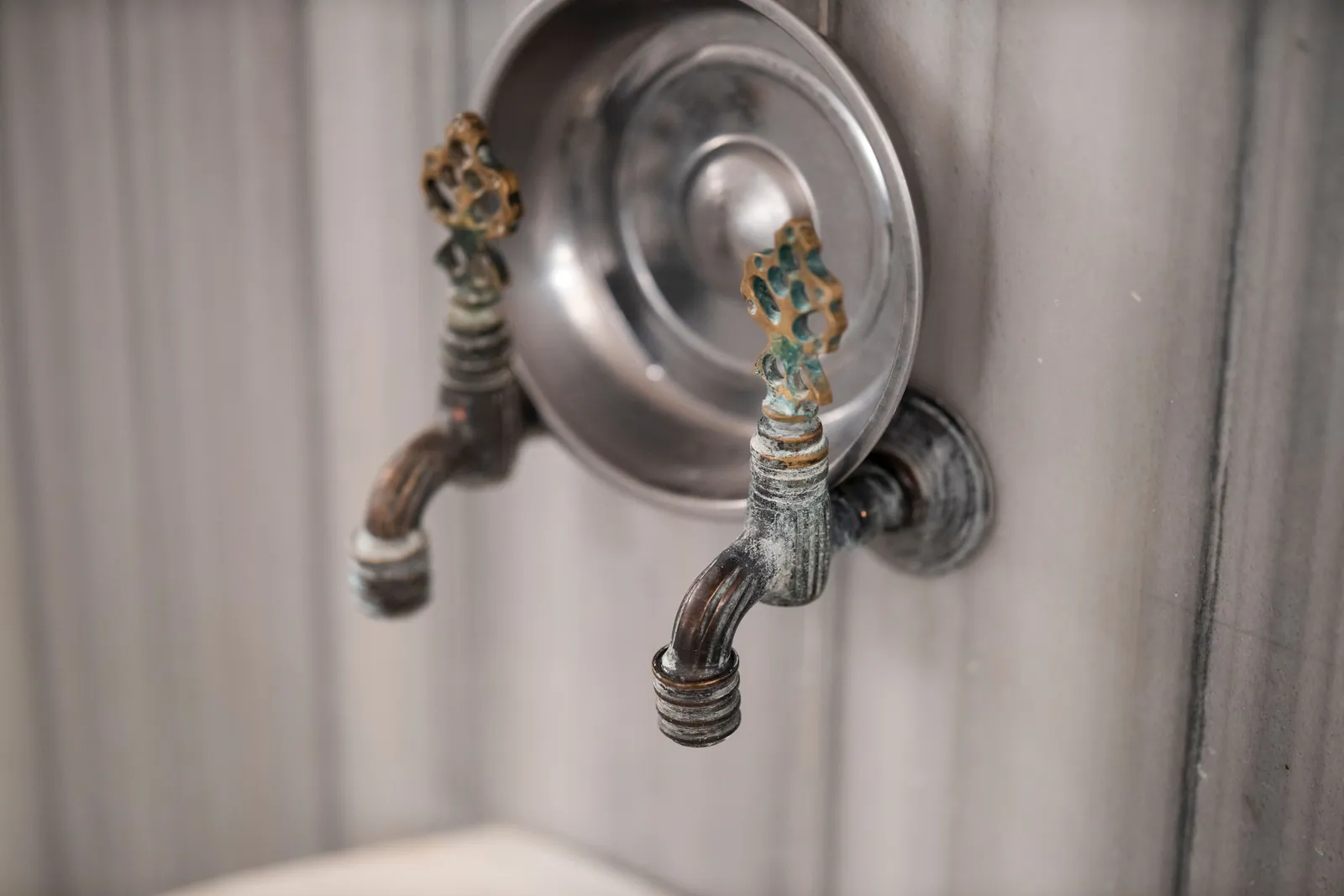
USGS sampling of 248 wells across Baldwin County returns a median pH of 5.90, with 79% of results under 7.0 and 67% under 6.5. That is soft, acidic water, and it is the opposite of the hard-water story national plumbing articles tell. Acidic water with almost no dissolved mineral in it does not coat the inside of a pipe with scale — it works on the metal. A house on a registered utility gets a corrosion-control step in between. A house on a private well gets the aquifer exactly as it is.
The two numbers, and what each one does
Take them separately, because they cause different damage.
Acidity. 248 well samples, median pH 5.90, range 4.1 to 9.2, 79% below neutral and 67% below 6.5. EPA's secondary standard for pH is a range of 6.5 to 8.5, and its listed effect for the low end is bitter metallic taste and corrosion. The same secondary table carries a line most people never notice: the standard for corrosivity is simply "non-corrosive."
Hardness. 177 well samples, median 12 mg/L as calcium carbonate — about 0.7 grains per gallon — with 87% under the 60 mg/L soft threshold. Nationally that reads like good news, and for a water heater's scale load it genuinely is. But mineral is also what deposits the thin protective film on the inside of metal pipe, and water carrying 0.7 grains per gallon deposits essentially nothing.
Soft plus acidic is the combination that matters. Either alone is manageable. Together they mean unshielded metal in contact with water that is chemically inclined to take some of it.
How corrosive is 5.90, really?
Alabama Extension publishes a plain scale for well owners, and it is worth reading against the county median rather than against a vague sense of "a bit acidic."
Below 6.0, the water is considered highly corrosive. From 6.0 to 6.9, somewhat corrosive, and stagnant testing is probably appropriate. From 7.0 to 7.5, probably not excessively corrosive. Above 7.6, it should not be particularly corrosive to metal plumbing.
The county median sits in the first band. Not near it — in it.
Why a well address feels this and a city address mostly doesn't
Because of a rule and a treatment step.
The Lead and Copper Rule requires public water systems to monitor at customer taps and, if lead exceeds an action level of 15 ppb or copper exceeds 1.3 ppm in more than 10% of samples, to undertake additional actions to control corrosion. It applies to public systems. It does not reach a private well.
USGS recorded what that looks like on the ground here. Beyond the chlorination Alabama public-health law requires of public-supply wells, the most common treatment of groundwater by Baldwin County public suppliers is pH adjustment, iron removal and aeration — and pH adjustment is the corrosion step. The same 1996 report notes that ground water is more acidic in the southern part of the county and that inland ground water is acidic and low in mineral content, then states plainly that the water from most private wells in Baldwin County is used without treatment or filtration.
Magnolia Springs is one of only 10 of the 22 communities Streamlined Plumbing serves with no registered municipal community water system (private wells), and it is also among the three lowest for median year built of the 22 communities Streamlined Plumbing serves — a place-level ACS median of 1983. Older housing stock and untreated acidic water is the combination that produces the calls. The Magnolia River corridor, the Fish River area and the streets around the Magnolia Springs Historic District are full of houses that were plumbed when copper was simply what you used.
What it looks like inside a house
The blue-green stain first. Alabama Extension treats it as diagnostic rather than cosmetic: a bluish-green stain on sinks and showers, or below a leaky faucet, means the water is highly corrosive, because blue-green is the colour of copper oxide. Copper going into solution also produces a metallic, usually bitter taste, and it can stain clothing, fixtures and hair.
Then the mechanical failures, which arrive later and cost more. Copper that is losing material from the inside tends to weep rather than split — a weeping fitting behind a wall, a damp spot on a ceiling under a bathroom, a slow rise in the water bill with nothing visible. General corrosion from acidic water acts on the whole system rather than one unlucky joint, so a second leak in the same house is worth taking seriously. Be careful how far you push that, though: the specific mechanism behind pinhole pitting is genuinely unsettled in the research — one AWWA study reproduced pitting at HIGH pH with low alkalinity, and a 2021 review still calls the causes poorly understood. Acidic water being corrosive to copper is established. Acidic water being the proven cause of any particular pinhole is not, and anyone who tells you otherwise is selling. It is information.
That is the fork worth understanding before you spend anything. One leak in copper is a repair. A third leak in copper in the same house is usually a signal that patching has stopped being the cheaper answer.
What we can do about it, and what we can't
Ours: find and repair the leak. Leak search and repair on a hidden weep, water line repair or replacement on a supply run that has gone, fixture and valve work where copper corrosion has taken out a shower valve or a stop, and a whole-home repipe when the arithmetic has turned. A repipe out of copper into PEX-a removes the metal the acid was working on, runs in long unbroken lengths so fewer joints end up buried, and does not care about pH. If you want the shape of that decision before calling anyone, the repipe cost guide sets out what drives it.
Not ours: neutralising filters, acid-neutralising media, calcite treatment — Alabama Extension describes a low-cost approach of laying three to five inches of calcite chips in the bottom of an existing well, replaced every three to six months — and any work on the well, the pump or the pressure tank. Alabama licenses water well drillers through ADEM's Water Well Standards Program under Admin. Code r. 335-9-1. A master plumber's licence does not cover it, and neither does MP-4462. For treatment, call a water-treatment company; for the well, a licensed well contractor.
The same chemistry shows up as a smell and a stain elsewhere in the house — that is iron and manganese staining and the rotten-egg smell. Before deciding on any of it, get the numbers: how to get a private well tested in Baldwin County.
We answer around the clock at (251) 423-7654. Brandon Byrd, Alabama Master Plumber MP-4462.
Sources. USGS Water Quality Portal, Baldwin County well samples — pH (248 results, median 5.90, range 4.1–9.2, 79% below 7.0, 67% below 6.5) and hardness as CaCO₃ (177 results, median 12 mg/L, 0–990 mg/L, 87% under 60 mg/L), retrieved 2026-08-01. USGS Open-File Report 96-487, Ground-Water Resources Data for Baldwin County, Alabama (Robinson, Moreland and Clark, 1996). Alabama Cooperative Extension System, "Water Corrosivity and Your Plumbing System." EPA, National Secondary Drinking Water Standards. EPA, Lead and Copper Rule. US Census ACS 5-year 2023, Magnolia Springs town, Alabama. ADEM Admin. Code r. 335-9-1.