How to Get a Private Well Tested in Baldwin County: the Two Lanes and What to Ask For
Bacteria testing goes through the county health department. Everything else goes through an EPA-certified lab. The analyte list, the sampling rules, and how to read the result before a plumbing decision.
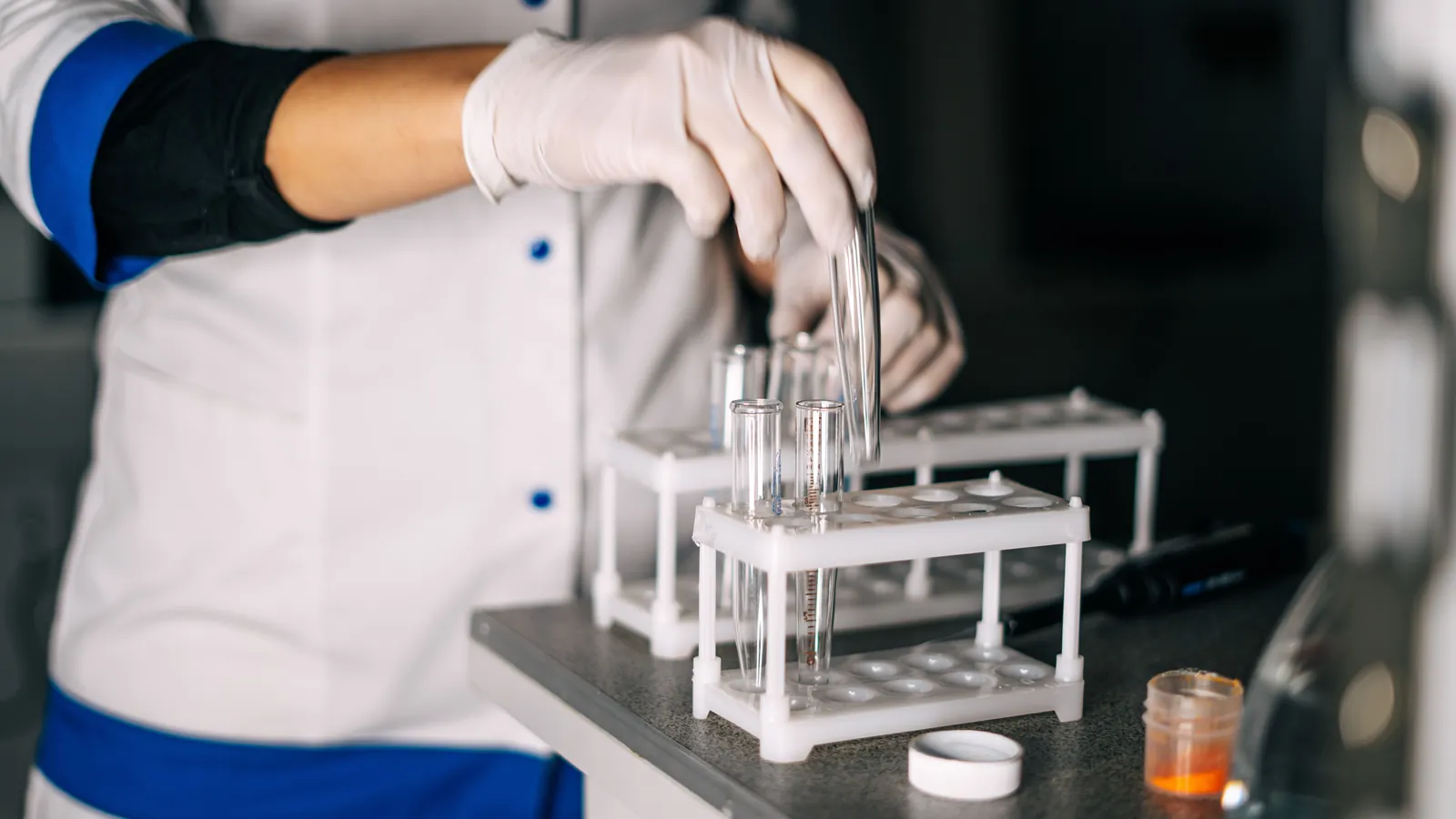
There are two lanes, and knowing which one you are in saves a wasted week. Bacteriological testing — the annual coliform and E. coli work — runs through the county health department or a certified private laboratory, and the health department may need to send an environmentalist out to draw the sample. Everything else runs through an EPA-certified laboratory. Before you ring either one, decide what the test is for, because the analyte list for "is this safe to drink" and the list for "should I repipe this house" are not the same list.
Lane one: the county health department, for bacteria
Alabama Extension states it directly in Water Testing in Alabama: Why, Where & How (FOR-2151, February 2024): "The county health department or a certified private laboratory are the local resources for annual bacteriological testing. Your water source may require an environmentalist from the health department to collect the sample. Call to receive sampling instructions and testing fee information."
The Alabama Department of Public Health's own instruction matches it: to have your well water tested, call your county health department and request that an environmentalist collect the sample. ADPH notes that there may be a collection fee and a testing fee, that results are available roughly 24 hours after the specimen is received, and — the sentence that frames the whole exercise — that if you obtain drinking water from your own well, you are responsible for ensuring it is safe.
Nobody sends you a report you did not ask for. There is no annual notice, no consumer confidence report, no regulator watching the number. On a well, the testing schedule exists only if you keep it.
Lane two: an EPA-certified lab, for everything else
Same Extension publication, same paragraph: "All other well water tests must go through an EPA-certified laboratory." ADEM runs the Drinking Water Laboratory Certification Program, which is where the certified list comes from.
One nuance worth getting right, because it trips people up. Auburn University's Soil, Forage and Water Testing Laboratory screens a broad mineral suite — arsenic, aluminium, barium, boron, calcium, chromium, copper, iron, pH, phosphorus, potassium, manganese, magnesium, nickel, nitrate, sodium, sulfate-sulfur and zinc, plus hardness, alkalinity, conductivity, soluble salts and dissolved solids. In FOR-2151 that laboratory appears under the heading for private wells described as non-potable, along with irrigation systems and ponds. It is an excellent way to characterise water for an equipment decision. It is not the drinking-water-certified route. Use the right lane for the question you are asking.
What should I ask them to test for?
Take the recommended schedule as written rather than paraphrasing it, because the split between the two frequencies is the useful part.
CDC, ADPH and Alabama Extension's Private Well Program recommend testing well water annually for total coliform, fecal coliform, E. coli, nitrate, total dissolved solids and pH. Every two to three years, add chloride, fluoride, sulfate, lead, hardness, calcium, copper, iron and manganese. EPA's private-well guidance names the same annual core: total coliform bacteria, nitrates, total dissolved solids and pH.
If you are calling because of a plumbing decision rather than a health question, four of those carry the weight: pH, hardness, iron and copper. Ask for them by name.
Reading the result like a plumber
The lab hands back numbers, not advice. Here is what they mean for pipe and equipment.
pH. Alabama Extension's corrosivity scale: below 6.0 is highly corrosive; 6.0 to 6.9 is somewhat corrosive; 7.0 to 7.5 is probably not excessively corrosive; above 7.6 should not be particularly corrosive to metal plumbing. For scale, USGS well sampling across this county returns a median of 5.90 across 248 results, with 79% below 7.0. EPA's secondary range for pH is 6.5 to 8.5. What that does to copper is the subject of acidic groundwater and copper pipe.
Hardness. The county's 177-sample median is 12 mg/L as calcium carbonate, about 0.7 grains per gallon, with 87% under the 60 mg/L soft line. But that series runs from 0 to 990 mg/L, so roughly one sampled well in eight is not soft at all. Your reading decides whether a water heater here needs anode-rod attention or scale management, and those are opposite maintenance programmes.
Iron and manganese. EPA's secondary limits are 0.3 mg/L and 0.05 mg/L. Above those you are looking at staining and fouled hardware rather than a health finding — secondary standards are aesthetic guidelines and are not federally enforceable.
Copper. There is no Lead and Copper Rule obligation on a private well; the rule binds public water systems, with action levels of 15 ppb for lead and 1.3 ppm for copper. But those numbers are still the sensible reference for reading your own report, and a copper figure climbing over successive tests on a copper-plumbed house is telling you the pipe is giving material up.
A newer house is not a different answer
Stapleton is one of only 10 of the 22 communities Streamlined Plumbing serves with no registered municipal community water system (private wells), and it is also among the three highest for median year built of the 22 communities Streamlined Plumbing serves — an ACS median year built of 2003 for the Stapleton CDP. Along the US-31 corridor, out toward the I-65 approach and across rural Stapleton acreage, plenty of the housing stock is younger than the plumbing in most of the county.
That is not protection. USGS records that private-supply wells in Baldwin County rarely need be more than 200 feet deep, with the most common depth about 100 feet, against public-supply wells generally between 100 and 300 feet. A twenty-year-old house and a twenty-year-old well draw the same water an eighty-year-old one does, and neither gets the treatment step USGS documented on the public side — pH adjustment, iron removal and aeration. The report's line about the private side has not changed: the water from most private wells in Baldwin County is used without treatment or filtration.
Keeping the results also has a use beyond the water. Extension notes that a record of consistent testing establishes the value of your well, which may help if you sell the property or if the well or its water quality are damaged. Out in Stockton and Perdido, where owner-occupancy is high and houses change hands slowly, that file is worth keeping properly.
What the test will not tell you
It will not tell you whether the casing is sound, whether the grout seal has failed, whether the cap is secure, whether the screen is fouled or whether the pump is on its way out. Those are conditions of the well, and they are diagnosed by a licensed well contractor — Alabama licenses water well drillers through ADEM's Water Well Standards Program under Admin. Code r. 335-9-1, which also requires a Notification of Intent before work and a Certification of Completion within 30 days after.
Our side of that line starts at the pressure tank and runs into the house: supply lines, fixtures, leaks, water heaters, tankless units, drains and repipes. We don't test water, we don't sell treatment and we don't work on wells or pumps — which is exactly why the advice above costs you nothing. If you want the boundary drawn properly, it is in where the well ends and the plumbing begins.
We answer around the clock at (251) 423-7654. Brandon Byrd, Alabama Master Plumber MP-4462.
Sources. Alabama Cooperative Extension System, Water Testing in Alabama: Why, Where & How, FOR-2151 (Carter and Haley, February 2024). Alabama Department of Public Health, private well water guidance. EPA, "Protect Your Home's Water." EPA, National Secondary Drinking Water Standards. EPA, Lead and Copper Rule. Alabama Cooperative Extension System, "Water Corrosivity and Your Plumbing System." USGS Open-File Report 96-487, Ground-Water Resources Data for Baldwin County, Alabama (Robinson, Moreland and Clark, 1996). USGS Water Quality Portal, Baldwin County well samples for pH and hardness, retrieved 2026-08-01. US Census ACS 5-year 2023, Stapleton CDP, Alabama. ADEM Admin. Code r. 335-9-1.