
Why Copper Pinholes Here Aren't a Hard-Water Story — Baldwin County's Water Runs the Other Way
Baldwin County's raw groundwater is soft and acidic — 248 USGS well pH samples with a median of 5.90, and 177 hardness samples with a median of 12 mg/L. The national scale narrative is the wrong frame here, and the honest version is more careful than either story.
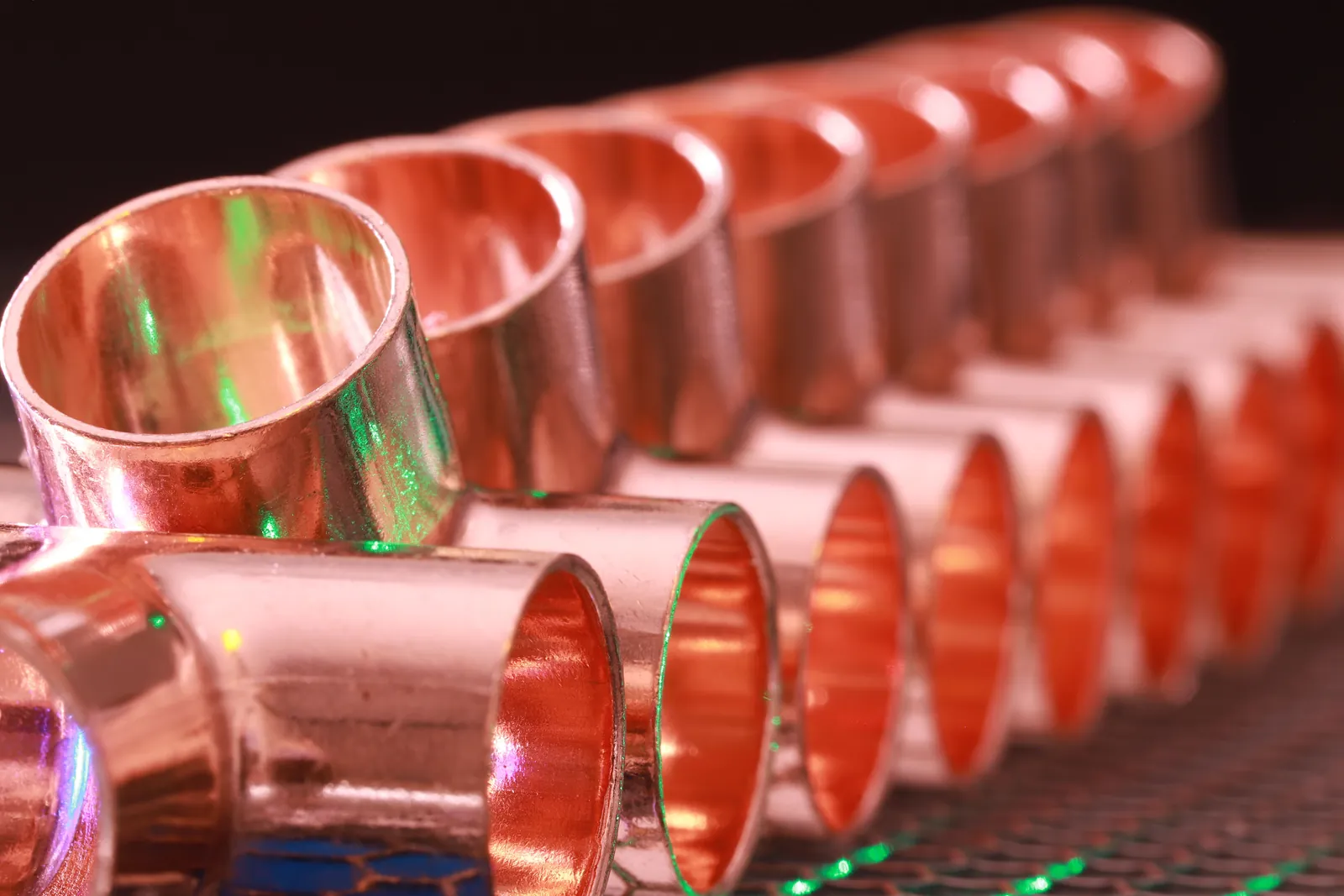
The story you will read on nearly every plumbing website is that hard water and mineral scale destroy pipe. Baldwin County's water does the opposite of that. USGS sampling of wells across this county returns a pH median of 5.90 across 248 measurements and a hardness median of 12 mg/L as calcium carbonate across 177 — mineral-poor water sitting below neutral. That is a real difference, it matters for copper, and the honest version of what it means is narrower than what most plumbers here will tell you.
What the county numbers actually say
Two separate USGS sample series, both drawn from wells in Baldwin County, both public.
On acidity: 248 measurements, median pH 5.90, with 79% of results below 7.0 and 67% below 6.5 — the lower bound of the EPA secondary standard range for pH. The extremes run from 4.1 to 9.2.
On mineral content: 177 measurements, median 12 mg/L as calcium carbonate, which converts to about 0.7 grains per gallon, with 87% falling beneath the 60 mg/L level USGS uses as the soft threshold. One sampled well returned 990.
That last figure is not a footnote. A median of 12 and a maximum of 990 in the same series means roughly one sampled well in eight is not soft at all, and that the county figure describes a county rather than a property. Anyone who tells a well owner what their water is like without testing it is guessing with a statistic.
Does that water cause pinhole leaks?
Two things are true at once here, and most writing on the subject collapses them into one.
What soft, mildly acidic water reliably does to copper is well established. It corrodes the surface generally rather than locally — thinning across the wetted area, showing up as blue-green staining on fixtures and as elevated copper at the tap. That is precisely why the federal Lead and Copper Rule sets a copper action level of 1.3 mg/L and obliges systems to run corrosion control. It also fails to build the protective mineral film that mineral-rich supply lays down inside a pipe, because water carrying 0.7 grains per gallon has almost nothing to deposit. That whole mechanism, and what it looks like on a private well, is worked through in what the county's acidic groundwater does to copper.
What produces the specific pinhole is a narrower and murkier question. A perforation through an otherwise sound copper wall is the most studied form of copper corrosion in drinking water, and the water chemistry that has actually been replicated in the laboratory as producing it is chlorinated water of high pH and low alkalinity — not acidic water. Lytle and Schock published that work in the Journal AWWA in March 2008. A thirty-year review of the field in AWWA Water Science in 2021 opened with the observation that despite decades of research, the pitting of copper pipes is poorly understood, and closed by listing the gaps that remain: benchmarking, chemical transients such as chlorine burns, hydraulic transients such as water hammer, and the effect of switching a disinfectant residual.
That distinction is not academic when somebody is deciding whether to replace a house's supply piping. "Your water is aggressive to copper" is a defensible statement here. "Your water caused that pinhole" is a claim nobody can currently stand behind, and it should not be the argument that sells you a repipe.
Where these numbers stop applying — three caveats
They are wells, not taps. Every reading in both series is raw groundwater sampled from a well. It characterises a resource, not a fixture.
Utility customers get treated water. Twelve of the 22 communities we cover sit behind a registered public water system, and a registered system carries a corrosion-control obligation under the Lead and Copper Rule. Between the aquifer and a utility customer's faucet there is a regulated treatment step, and the annual water quality report from that utility is where a finished-water number lives.
Spanish Fort is not a groundwater town at all. Of the twelve registered systems on our map, exactly one — PWSID AL0000068, serving Spanish Fort — draws surface water. Every other one is groundwater. Applying a well-sample median to a Spanish Fort address is not a caveat problem, it is the wrong reference entirely, and I would rather say so than let a county number do work it cannot do near the Causeway and up through Timber Creek and Blakeley Forest.
Why this lands differently on a private well
Montrose is one of only 10 of the 22 communities Streamlined Plumbing serves with no registered municipal community water system — the bayfront properties along the Scenic 98 corridor and through the historic district supply their own water. There is no plant adjusting pH before it reaches the house, which means the source chemistry and the tap chemistry are the same thing.
It is also the smallest stock we cover: the lowest total housing units of the 22 communities Streamlined Plumbing serves, at 217, and the lowest population of the 22 communities Streamlined Plumbing serves, at 350 — with a median year built of 1989. Untreated water, in plumbing with a mid-1980s midpoint, in Mobile Bay shoreline homes where a great many buildings sit empty for stretches. That is the combination where source chemistry stops being background and starts being a practical question.
It is also where the standard leak-detection opening move fails. Watching the meter requires a meter. On a well the substitute is a pressure-decay test: isolate a section, bring it to a known pressure, shut it in, watch the gauge. Holding means that section is sound; falling tells you roughly what size of hole you are hunting. That is ordinary leak detection work and it is how a water stain with no obvious source gets settled on a property with no meter — what it involves in the Montrose Historic District and along the bay is on the Montrose leak detection page.
What to do instead of guessing
Test your own supply if you are on a well. pH, hardness and iron, from a laboratory, on your water. It is the cheapest input into every subsequent decision and it is the one nobody can do for you from a dataset.
Read your utility's report if you are not. The finished-water numbers in it are the ones that describe your faucet. A county well median does not.
Do not buy treatment equipment off a regional figure. A softener removes hardness. In water at 0.7 grains per gallon there is very little hardness to remove, and a household on treated municipal supply is unlikely to be the right customer for one. What acidic well water sometimes calls for is a neutralising filter, which is a different machine solving a different problem — and which one, if either, is a question a test answers and a blog post cannot.
Note that none of this tells you what is behind your walls. No public record contains the plumbing materials of a property. Whether there is copper in your house at all is established by looking, and it is the first thing worth establishing before spending a thought on chemistry.
When it stops being a chemistry question
One perforation in otherwise sound copper is a repair, and that is routine water line repair work — the cause is interesting but not decisive. Two or three perforations, in different rooms, months apart, is the material reporting on its own condition, and at that point the argument about mechanism stops paying rent. Chasing them individually loses to a whole-home repipe over any horizon worth planning against, and the repipe cost estimator will let you put shape on that before anyone comes out. The five questions I would want answered first are in the repipe decision framework.
Call (251) 423-7654 at any hour. Brandon Byrd, Alabama Master Plumber MP-4462.
Sources. pH and hardness series: USGS / EPA Water Quality Portal (waterqualitydata.us), Baldwin County, Alabama, well-site samples — 248 pH measurements (median 5.90, range 4.1–9.2, 79% below 7.0, 67% below 6.5) and 177 hardness-as-CaCO₃ measurements (median 12 mg/L, 0.7 grains per gallon, 87% below the 60 mg/L USGS soft threshold, maximum 990 mg/L). Lytle, D. and Schock, M., "Pitting corrosion of copper in waters with high pH and low alkalinity," Journal AWWA 100:3, March 2008. Gibson, J. et al., "A 30-year review of copper pitting corrosion and pinhole leaks: Achievements and research gaps," AWWA Water Science, 2021. US EPA Lead and Copper Rule copper action level (1.3 mg/L) and National Secondary Drinking Water Regulations pH range. Water system identifiers and source types from EPA SDWIS (data.epa.gov). Median year built and housing-unit counts from Census ACS 2023 5-year estimates at place level.