
Fairhope's Water Has Stopped Twice, and Neither Time Was Anybody's Plumbing
A water main broke in Fairhope during the January 2025 freeze, and five months earlier a well pump failure put the city under mandatory Phase III restrictions. How to tell a system-side outage from a house-side one, and what to do when pressure comes back.
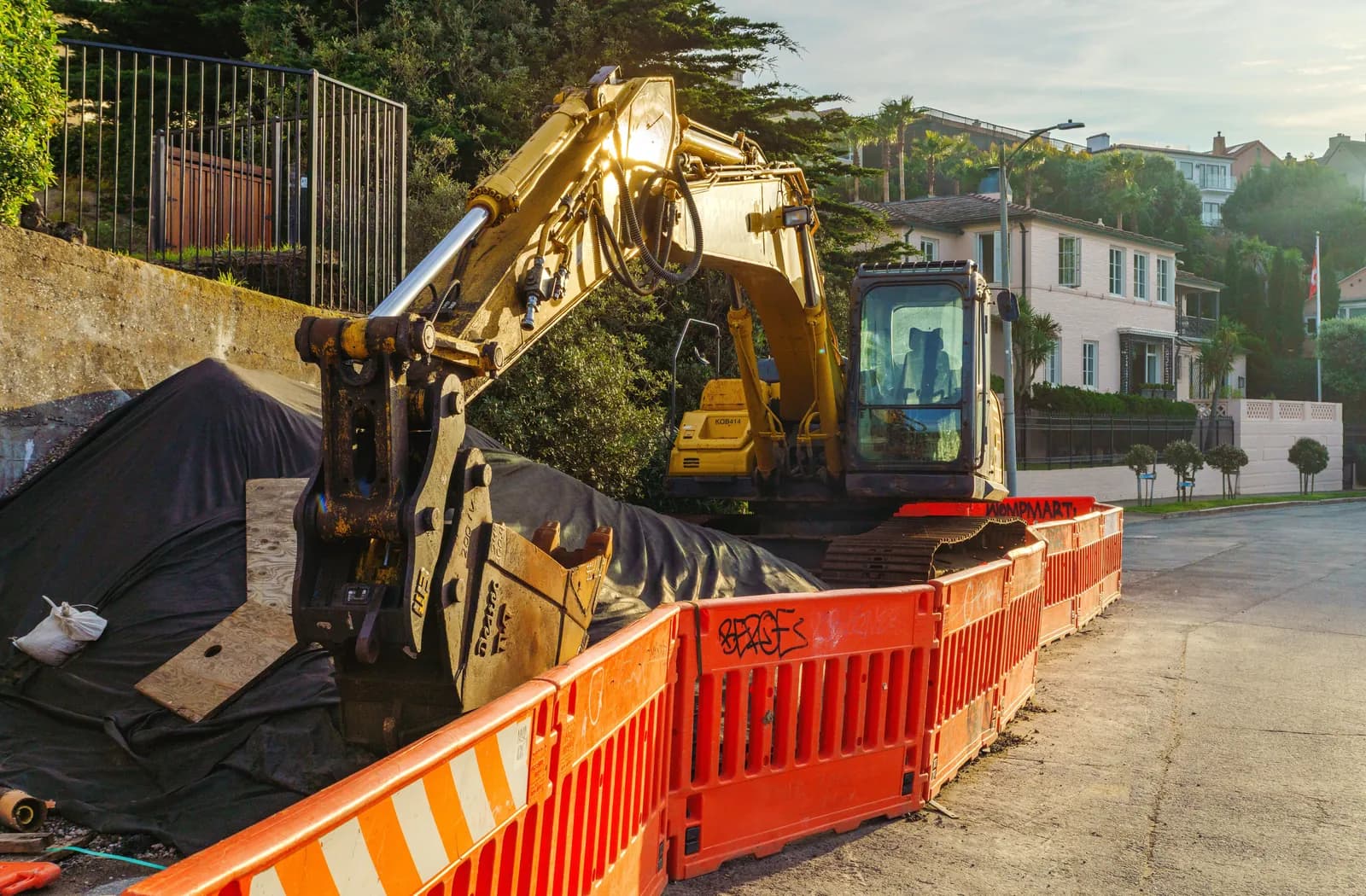
If the water in your Fairhope house stops, slows to nothing, or comes back brown, the first question is not what broke. It is whose it is. Twice in recent memory the answer here was the city's, not the homeowner's — a water main that broke during the January 2025 freeze, and a well pump that failed in August 2024 and put the whole city under mandatory restrictions. Both are documented, and knowing the pattern saves an unnecessary call.
Two events, five months apart
January 21–22, 2025. The storm that produced a record 7.5 inches of snow at Mobile Regional Airport — breaking a 6.0-inch mark set in February 1895 — and a low of 6°F on the 22nd also dropped 8.1 inches on Fairhope, with measured lows here of 12 to 14°F. A water main break was reported in Fairhope in the aftermath. Elsewhere in the county, North Baldwin Utilities issued a boil-water notice on January 23 for roughly 300 services in Lottie and Rabun, citing excessive leaks detected in its system after extreme winter weather followed by thawing, and did not lift it until January 29.
August 2024. A failure on one of the city's own production well pumps — utility plant, not anything on a private property — during peak summer demand took Fairhope to mandatory Phase III conservation — no lawn watering, no car washing. Usage had been running at 9.4 to 9.5 million gallons a day for a week. Mayor Sherry Sullivan attributed the excess to lawn irrigation in a hot, dry August, and Riviera Utilities asked its own customers to stop irrigating at the same time.
Read those two together and the shape of the risk becomes obvious. Fairhope is served by a registered public system, PWSID AL0000035, drawing on groundwater and recorded as serving 59,850 people — against a resident population of 23,360 inside the city limits. That is a large system with a lot of buried asset and a finite number of production wells, and it can be knocked sideways by cold in one season and by demand in another. Neither event started in a house.
How do you tell which side of the meter the problem is on?
The meter answers it, and the test costs nothing.
Find the meter box — in most of Fairhope it sits near the property line at the front, whether the house is up on the ridge or down on the bluff side toward Mobile Bay. Close the valve there. If water is still running somewhere, or the loss you are hearing does not change, the problem is not on your side. If closing it stops everything, whatever is happening is downstream of that valve, and downstream of that valve is yours.
Three more signals point upstream before you ever open the box:
The whole street is out. A house-side failure does not take the neighbors with it.
Pressure fell everywhere at once, with nothing wet. A supply failure inside a house announces itself with water somewhere. A pressure loss with no water anywhere is a supply-side event until proven otherwise — the low water pressure page walks the rest of that decision tree.
It came back on its own. Broken pipe does not heal. Restored service does.
What none of that answers is where your ownership formally begins. That boundary sits in your utility's records and your plat, it is not the same at every address, and no dataset behind this site contains it — the public records here are EPA drinking-water records. Establish it with the utility before something fails, not during. The same distinction, drawn on the other kind of supply, is in where the well ends and the plumbing begins.
What to do while the water is off
Close the main shutoff valve if you are told service will be restored later, or if you are leaving the house. This is the step people skip and regret. When the system repressurizes, it does so suddenly, and every open tap and running appliance in the neighborhood takes the surge at the same moment.
Turn the water heater down or off if the outage will run for hours. An electric element that fires in a tank that has partly drained is a dead element, and that is an avoidable water heater call.
Do not chase pressure by opening every fixture in the house. It does not bring water sooner, and it guarantees that when service returns you have a dozen open taps spitting air and rust into sinks nobody is standing at.
Bringing the house back up
Restored water is not clean water for the first few minutes, and the sequence matters more than most people expect.
Start low and outside. Open a hose bib or the lowest cold tap in the house and let it run until the spitting stops and the water clears. Then move upward and inward, cold before hot, one fixture at a time.
Leave the appliances until last. Dishwashers, ice makers and washing machines have the smallest inlet screens in the building, which makes them the most efficient sediment traps you own. Run the sinks first and give the debris somewhere else to go.
Then clean the aerators. If one fixture is weak afterward and everything else is fine, the aerator is the first suspect and it unscrews by hand.
Watch the water heater for a week. Sediment stirred up by a pressure event settles into the tank, and the tell is usually noise — popping or rumbling that was not there before.
And if the utility issues a boil-water advisory for your address, follow the utility's instructions and nobody else's. That notice belongs to the system that serves you, and only that system can lift it.
Why the January version is the more dangerous one
Because a freeze does two things at once, and the second one is delayed.
In 2025, at the Fairhope coordinate, 13 dates fell to or below 32°F, eight of those to or below 28°F, one to or below 20°F, with a coldest reading of 15.5°F. That is a single calendar year of reanalysis rather than a long-run average, and it is a real exposure — enough nights to find every unprotected run in a house between downtown and the Pier, along Scenic 98, and out toward Greeno Road.
What makes it dangerous is the order of events. The main breaks or the pressure drops during the cold. Then the thaw arrives, and the ice inside a house-side pipe that split on the coldest night lets go — often into a wall cavity, often a day or two after everybody has decided the emergency is over. If a system-side outage has just masked a house-side split, you find out when pressure returns. That mechanism is the whole subject of burst pipes showing up during the thaw, and which alerts are worth acting on is in the freeze-window piece.
So the honest instruction for a Fairhope house after any January outage is: when the water comes back, walk the house. Ceilings, under sinks, the garage wall, the attic hatch, the meter box. Look for damp before it becomes a stain.
When to call, and who
If the street is out, call the utility that bills you. That is the only party who can tell you what happened and when it will be fixed.
If pressure has returned everywhere except your house, or if it returned and something is now leaking, that is a house-side problem and it is ours. A buried run between the meter and the building is water line repair work — the Fairhope page covers what that looks like here. Damp with no visible source is leak detection. Anything actively running goes to the main valve first and then to emergency plumbing, answered around the clock at (251) 423-7654, or the Fairhope emergency page for what a night call actually involves. The shop is on Morphy Avenue, half a mile of road from most of this city — which is a distance, not a promise about arrival. Brandon Byrd, Alabama Master Plumber MP-4462.
Before the next window opens, the freeze prep checklist is the short version of everything above, done in advance.
Sources. NWS Mobile, January 2025 snow event and January 2025 climate summaries (weather.gov/mob/2025_January_Snow), for the 7.5-inch Mobile record, the 6°F low of January 22, the 8.1-inch Fairhope snow total and Baldwin County lows. Fairhope water main break via WKRG, "Water main break reported in Fairhope after historic winter weather event." North Baldwin Utilities boil-water notice, issued January 23, 2025 and lifted January 29, 2025 (northbaldwinutilities.com). August 2024 Fairhope Phase III mandatory conservation, well pump failure, 9.4–9.5 MGD usage and Mayor Sherry Sullivan's attribution to lawn irrigation, via FOX10 News and 1819 News. Water system identifier, groundwater source type and population served of 59,850 from the EPA SDWIS drinking-water registry (data.epa.gov). Resident population of 23,360 from Census ACS 2023 5-year estimates at place level. Fairhope's 2025 freeze-day counts and 15.5°F minimum are per-coordinate ERA5-Land reanalysis via the Open-Meteo archive for a single calendar year, not a climate normal.