
Flushing a Water Heater in a Soft-Water County: What Actually Comes Out
The annual-flush advice online is written for hard-water states. Baldwin County's raw groundwater has a median hardness of 12 mg/L — so the real reason to flush here is different, and so is the way this job goes wrong.
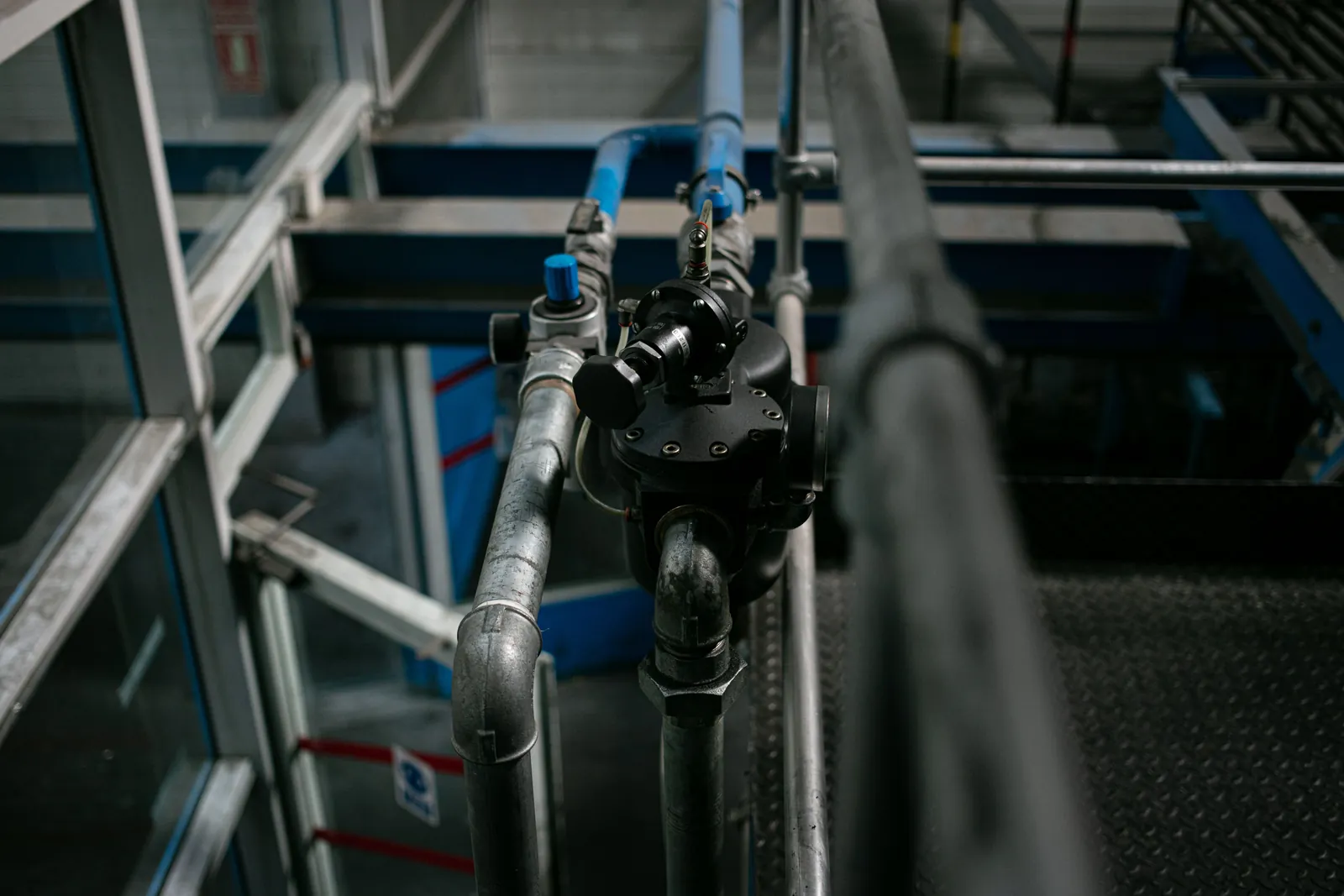
Almost every guide to flushing a water heater is written from the same assumption: that your water is hard, that scale is building on the tank floor, and that an annual flush is therefore non-negotiable. In this county that assumption does not hold. Raw groundwater sampled from wells across Baldwin County has a median hardness of 12 mg/L as calcium carbonate, with 87% of 177 measurements below the USGS soft threshold. Flushing here is still worth doing — but for different reasons, and with a specific trap waiting in the middle of it.
Does a water heater here actually need flushing?
Sometimes, and less religiously than you have been told. What sits on the bottom of a tank in Baldwin County is generally not the lime crust that guides in Arizona are describing.
What does collect, in rough order of how often it turns up:
Fine suspended solids from the supply. Every distribution system carries some, and a tank is where they stop moving. This is the ordinary case and it accumulates slowly.
Sand and iron on private wells. Ten of the 22 communities we cover have no active community water system registered with EPA, which means a well, a pump and no treatment step between the aquifer and the tank. Iron and fine sand from a well are the most physically substantial thing that ends up in a water heater around here, and it is the well houses out toward Loxley, Robertsdale and Rosinton where I would flush on a schedule rather than on symptoms.
Genuine scale, on the wells that are not soft. That 12 mg/L median hides a maximum of 990 mg/L in the same data set. Thirteen percent of sampled wells are above the soft threshold, so hard water is real for some addresses in this county and irrelevant for most.
Worth a note on the utility side, because it is a genuine local oddity: EPA's registry lists the Spanish Fort Water System, serving 10,161, as drawing surface water. Every other registered community system serving our 22 communities is listed as groundwater — Fairhope, Daphne, Foley, Gulf Shores, Orange Beach, North Baldwin and Robertsdale among them. One surface-water system on the whole map, sitting up between the Causeway and the Eastern Shore ridge, with Blakeley Forest and Stonebridge on the same supply. That does not change the flushing procedure; it does mean anybody comparing notes with a neighbour across Mobile Bay is comparing two different sources of water.
Before you open anything: prove the shutoffs work
This is the step that separates a maintenance job from a call to us at ten on a Saturday night.
Find your main shutoff valve and close it, all the way, then open a tap to confirm the house actually loses pressure. Then open it again. In this climate, gate valves that have not moved in a decade seize, and they seize in the open position, which you will only discover on the day you need them closed. Do the same with the cold-water shutoff on top of the heater.
If either one will not close, stop. That is a valve replacement, and it is a small job today and a large one on the night the tank opens up.
The procedure
Kill the heat and wait
Electric: switch the breaker off, and confirm it is off. Gas: set the control per the manufacturer's instructions — that is their sequence, not ours. Then leave it. Draining a tank of scalding water into a garden hose is how people get hurt; give it hours, not minutes, or run the hot taps until the water is merely warm.Close the cold supply, open a hot tap
Shut the cold inlet valve on top of the heater. Then open a hot tap somewhere in the house and leave it open. That is what lets air in — a sealed tank drains about as well as a sealed bottle, and people who skip this step spend twenty minutes wondering why nothing is moving.Run the hose somewhere sensible
Thread a garden hose onto the drain valve at the base and run it outside, to a floor drain or into a bucket you can watch. Sediment-laden water stains, and a hose that pops off an unattended fitting empties a full tank onto the floor.Open the drain valve and watch what comes out
The first flow is the informative part. Clear means very little is in there. Cloudy grey or brown means sediment. Grit, sand or rust flakes on the bucket bottom means the well or the tank is contributing solids, and that is worth knowing before you decide anything else.Once empty, pulse the cold supply
With the drain still open, crack the cold inlet on and off a few times. The inrush stirs what settled and pushes it out — a static drain leaves most of a sediment bed exactly where it was.Close, refill, purge, then re-energise
Close the drain, remove the hose, open the cold supply, and leave the hot taps open until water runs steady with no spitting. Only then turn the power or the gas back on. Energising a partly empty electric tank destroys the elements in seconds.
The job most people should be doing instead
If you are going to spend an afternoon on a water heater in a county whose median groundwater hardness is 12 mg/L, the anode rod is a better use of it than the flush. It is the sacrificial metal that corrodes so the tank does not, and once it is consumed the tank is next. Flushing removes debris; the anode is what determines whether the thing is still standing in year twelve.
Checking it needs a 1‑1/16 inch socket, a breaker bar, and enough ceiling clearance above the heater to withdraw a rod nearly as long as the tank — which a lot of installations here do not have. If yours does not, that is a good reason to have it done with the right tooling — it is routine water heater service — rather than to skip it for another five years.
When flushing is the wrong move
Do not flush a tank that is already leaking. Do not flush one that has stopped making hot water until you know why — an element or thermostat fault is a diagnosis, not a maintenance problem. And think hard before flushing a tank well past ten years old: a heavy sediment bed can be sitting over pinholes that it has effectively been plugging, and clearing it can be the day the leak appears. Flushing did not cause that. It just picked the date. If the tank is at that age, what a replacement costs is worth reading first so the decision is not made under pressure.
And if the meter is turning with everything in the house closed, the water heater is not your only question — that is leak detection work, wherever the wet patch happens to be.
We answer around the clock at (251) 423-7654. Brandon Byrd, Alabama Master Plumber MP-4462.
How long the tank has left in the first place, and what the county's raw groundwater chemistry has to do with it, is in how long a water heater lasts here. If what you have on the wall is a tankless unit instead, none of the above applies and the maintenance is a different procedure entirely — that one is here.
Sources. Groundwater hardness (median 12 mg/L as CaCO₃ across 177 well samples, 87% below the USGS soft threshold of 60 mg/L, maximum 990 mg/L) from the USGS Water Quality Portal, Baldwin County well samples — raw groundwater, not treated tap water. Community water system names, source type (surface water vs groundwater) and populations served from the EPA SDWIS drinking-water registry. Sediment, capacity-loss and noise signals from ENERGY STAR, "When Should You Replace Your Water Heater?".