
Water Around the Toilet Base: Telling Condensation From a Failed Seal
On a humid coast the comfortable answer is always sweat. A twenty-minute dry test settles it — and if the water tracks the flush rather than the weather, the seal under the toilet is already gone.
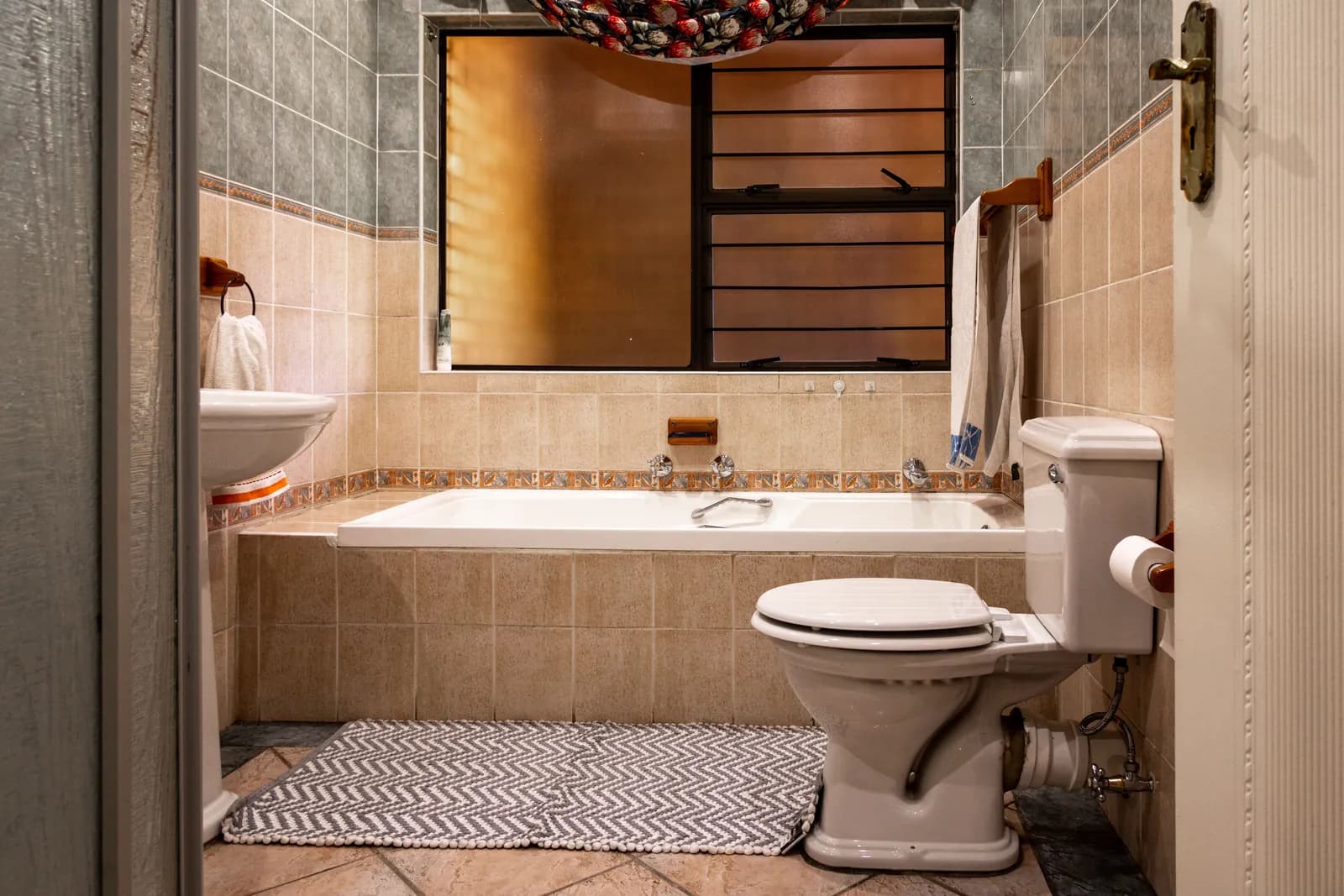
Water on the floor around a toilet has two common explanations, and on this coast people reliably pick the wrong one first. Condensation is real here — a tank full of cold water in a bathroom at Gulf Coast humidity will sweat, and the puddle it leaves is genuine. It is also the comfortable answer, because it means nothing is broken. The other answer is that the seal under the toilet has failed, and that one means water has been going somewhere you cannot see for as long as the puddle has been showing up.
On tile the two look identical. Telling them apart takes twenty minutes and a paper towel.
The dry test
The point is to clear every drop of standing water, then find where the next one arrives from and what triggered it.
Dry everything, including the tank
Towel the floor, the base, the supply line and the entire outside of the tank until nothing is damp. If the room is humid, run a fan on it for a few minutes. You cannot read a wet floor.Lay dry paper towel and leave it alone
Tuck folded dry paper towel around the base where it meets the floor, and tape a strip to the underside of the tank. Then keep the household off that toilet for an hour — no flushing at all.Read the towel before you flush anything
Damp under the tank with a dry base is condensation, and the tank is the source. Damp at the base after an hour of no use, with a dry tank and a dry supply, is unusual and points at the drain rather than the fixture.Now flush it, several times
Replace the towel, then flush three or four times over ten minutes and check again. Water that appears only now, at the joint between the base and the floor and usually on one side first, is the seal.
Timing is the whole discriminator. Condensation does not care whether anybody used the toilet — it tracks the dew point and the room, which is why it shows up on August afternoons and disappears in January. A seal leak does not care about the weather. It tracks flushes. If you can make the water appear on demand, you are not looking at sweat.
Where it appears matters nearly as much. Condensation forms on the tank, runs down the back and sides, and reaches the floor behind the toilet. A failed seal puts water at the perimeter of the base itself. A third possibility is worth ruling out while you are down there: the supply line, the shutoff valve, or the bolts holding the tank to the bowl. Those drip from above, and the trail always leads upward. Anything reachable with the angle stop closed is a smaller conversation entirely.
What is a failed seal actually doing?
The seal is a ring of soft wax crushed once between the outlet horn on the underside of the toilet and the flange set in the floor. It is not a gasket in the ordinary sense. There is no spring in it. It seals by deforming into the exact shape of the gap it found on the day the toilet was set, and it holds that shape as long as nothing disturbs it.
That single fact explains how it fails.
It fails intermittently, because the joint is only under pressure for the few seconds a flush is passing through it. The rest of the day it is dry, and somebody who checks the floor at nine in the morning has learned nothing.
And it fails downward. The wax is sealing the top of an open drain. When it channels, most of what escapes goes into the flange and out into the floor structure, because that is where gravity is pointing. What reaches the tile is the fraction that could not get away fast enough.
Sewer gas is the other tell, and a reliable one. The same failed seal that lets water out lets gas out, by the same route. A sewage smell at one toilet and nowhere else in the house is a seal problem until somebody proves otherwise.
Why caulking hides it
Sealing the base of a toilet to the floor is normal, sensible practice. It keeps mop water and worse out of the gap, it stops the fixture skating around, and most inspectors expect to see it.
Done wrong it also erases your only warning system. A continuous bead all the way around turns the base into a shallow cup. The seal keeps failing, the water keeps going down into the flange and the floor, and nothing reaches the tile any more. The homeowner concludes the problem fixed itself.
The convention that exists precisely to avoid this is to seal the front and the sides and leave a gap at the back. If the seal ever goes, the water has one place to show.
A toilet that stopped leaking the week somebody caulked around it did not stop leaking.
The fix means lifting the toilet, and there is no version that does not
There is nothing you can inject, spread, shim or tighten from outside that renews that seal. It works by compression, in a joint you cannot reach with the fixture in place. Anything sold on the promise of sealing a toilet base from above seals the exit route, not the leak.
So the job is a pull and reset. The supply is shut and disconnected, the closet bolts come off, the toilet is lifted straight up and set aside, the old wax is scraped off both faces, and it goes back down on a fresh seal with new bolts.
The sealing itself is the quick part. The valuable part is the ten minutes in between, because lifting the toilet is the only way anybody sees what is underneath it — and that is what decides whether this is a small job or the start of a bigger one.
The two ways a reset grows
The flange. The collar in the floor that anchors the toilet and gives the wax something flat to compress against. It can be corroded, cracked, snapped at the bolt slots, or sitting below the finished floor because somebody laid tile over it years ago. Each is a genuinely different repair, and worth understanding before anybody quotes you — the four findings and the three repairs.
The subfloor. If the seal has been going a while over a crawlspace, the plywood around the flange may be soft. Screws into soft plywood hold nothing, so a toilet set on a rotten floor rocks again within months, and a toilet that rocks destroys the new seal exactly as it destroyed the old one — the argument made in why shimming a rocking toilet fixes nothing.
I will tell you plainly which I find. Floor repair beyond the immediate patch around a flange is carpentry, and I would rather name that than pretend otherwise.
Two things specific to living here
Humidity keeps the condensation story plausible far longer than it should be. Where tanks genuinely do sweat for months at a stretch, a real seal leak gets waved off through an entire summer. The dry test earns its twenty minutes precisely because the easy explanation is locally credible.
The housing stock also splits. Older neighbourhoods around Fairhope, Montrose and Point Clear carry a lot of pier-and-beam construction, where a seal leak feeds straight into wood in a humid crawlspace. Newer subdivisions through Daphne and Spanish Fort are slab, where nothing rots but the water spreads under the flooring instead. And in rental stock a guest bathroom is used hard for three days and then not at all for eleven, so the leak happens in bursts nobody is present to see.
Where this lands
If the towel says condensation, you have a comfort problem rather than a plumbing failure. If it says the flush, the toilet is coming up, and what happens next depends on what the flange looks like when it does.
That work is toilet repair — locally, the Fairhope toilet repair page. If the meter is turning with every fixture in the house shut off, the problem is not this toilet and it belongs with leak search and repair. If you already have standing water somewhere it should not be, we answer around the clock at (251) 423-7654 for emergency plumbing.
Repair work carries a two-year warranty. Brandon Byrd, Alabama Master Plumber MP-4462.
The other half of a toilet's leak life happens inside the tank, where the parts genuinely are homeowner territory: the flapper and fill valve piece.
Sources. Condensation on a toilet tank occurs when the tank's exterior surface sits below the dew point of the surrounding air — standard psychrometrics, and the reason the effect is seasonal on the central Gulf Coast. Wax closet-ring installation instructions from the major manufacturers state that the ring is single-use and must be replaced whenever the fixture is removed. Model plumbing code requires that a water closet be set level on a firm base and that the joint between fixture and floor be sealed; the practice of leaving the rear of the base uncaulked as a leak telltale is a trade convention rather than a code requirement.