
Six Weeks Idle, Then Fourteen People: Turnover Weekend and a Rental's Plumbing
A coastal rental's plumbing does nothing for weeks, then takes a full-house load in one afternoon. The failures that pattern produces are specific, and so is the window to fix them.
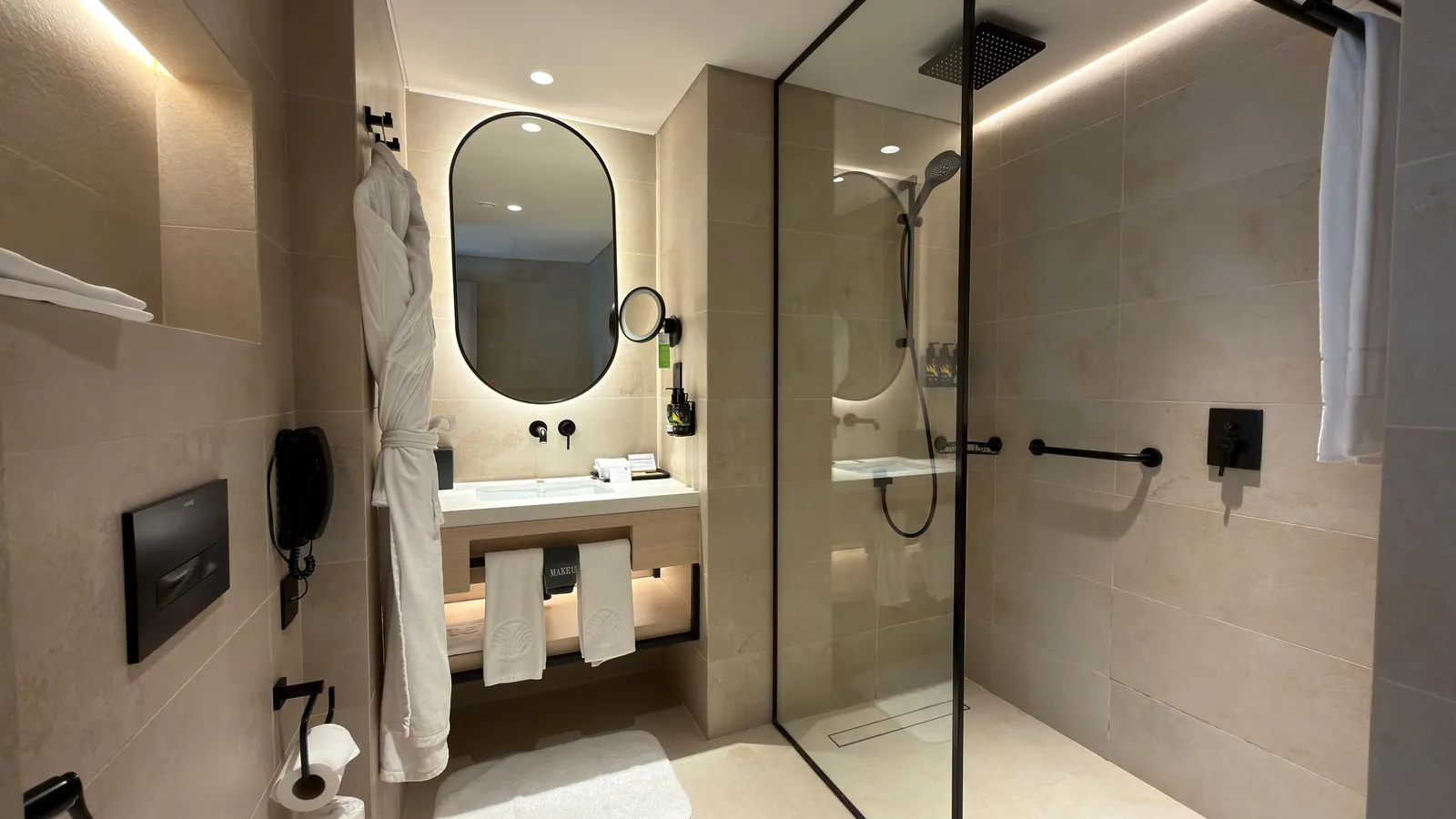
A rental on this coast does almost nothing for weeks, then takes a full-house load in a single afternoon: fourteen people arrive, six showers run back to back, two washer loads go in, and every fixture in the property is used within four hours of a check-in. That pattern is not what residential plumbing is designed around, and the failures it produces are predictable enough to plan for if you own one.
The demand curve nobody designs for
Residential systems are sized on an assumption called diversity — that not everything runs at once. A family of four staggers its showers, runs one appliance at a time, and leaves the water heater long quiet stretches to recover. That assumption is what lets a modest tank and a modest supply line serve a whole house comfortably.
A changeover breaks it on purpose. Everyone arrives together, everyone has been in salt water, and everyone wants a shower before dinner. Peak simultaneous demand in a sleeps-fourteen rental on a Saturday afternoon is a different load than the same building sees in an entire quiet week.
Then it inverts. Along the Gulf Shores corridor, vacation-rental occupancy runs 17.1% to 22.5% in December against 81.5% to 84.9% in July, and taxable lodging revenue swings roughly eight and a half to one between those two months. January climbs back to somewhere around 42% to 50% as winter residents arrive — snowbirds account for about 39% of January occupancy and 54% of February's — but that is still a property standing largely idle for months at a stretch.
So the plumbing in a coastal rental lives at two extremes and almost never in between: hammered, or untouched. Both ends do damage, and they do different damage. That is true of the beachfront towers along Beach Boulevard, of the golf-side houses at Kiva Dunes, and of everything in between — vacation rentals in this part of Baldwin County share a duty cycle that year-round housing simply does not have.
What the hammered end breaks
Hot water, first and most visibly. A tank has a capacity and a recovery rate, and the second number is the one guests discover. Six consecutive showers do not fail because the tank is faulty; they fail because the tank is being asked to reheat faster than its burner or element can. If the property has an original heater — and the median Gulf Shores housing unit dates from 1998, so a great many do — sediment in the bottom of the tank has also been eating into both numbers for years. That is a real, measurable loss of usable capacity, and it is the case where water heater work genuinely changes the guest experience rather than just replacing something.
Drains, and specifically sand. This is the most Gulf Coast failure on the list, and a property backing onto Gulf State Park sees it as surely as one on the beach. Sand comes off feet, boards, chairs and gear, goes down showers and tubs, and settles out in the trap because it is heavier than water and has nowhere else to be. It builds a bed in the bottom of the bend, and then hair, sunscreen and everything else catches on it. A sand-loaded trap does not behave like a grease clog — it does not respond to a plunger and it comes back within weeks of being poked at, because the bed is still there. Clearing it properly means getting the solids out, not pushing them along, which is what drain cleaning is actually for. In a beachfront property it is maintenance rather than a repair, and it recurs on a schedule you can predict.
Toilets. Fill valves and flappers are consumables and they are worked hard here. A flapper that has gone soft lets the tank bleed down and the valve refill on a cycle, which in an occupied property somebody notices and reports in a day. In a property between bookings, it runs for as long as the gap lasts. Toilet repair is a small job whose value scales with how empty the building is.
Laundry. Back-to-back linen loads on changeover day are the heaviest use a residential washer standpipe ever sees. A drain that keeps up with one load a week will overflow on the third consecutive load, and the failure lands on the floor rather than in the machine.
Angle stops and supply hoses. Every under-sink stop in a rental has been bumped by luggage, cleaning carts and guests looking for a spare roll of something. Braided supply hoses have a service life and they do not fail gracefully. Both are inexpensive; both are responsible for a wildly disproportionate share of water damage in buildings where nobody is home.
Anything exposed to the outside air. Hose bibs, outdoor rinse showers and exterior fittings on a beachfront property corrode on a schedule of their own, which is covered in what salt air does to the hardware on a coastal house.
What the idle end breaks
Everything that depends on being used.
Trap seals evaporate, and the barrier between the drain system and the room is nothing but that standing water — the guest bath, the laundry standpipe and any floor drain go first. That failure and its fix are covered in what an off-season does to a P-trap, and it is worth reading before the first spring arrival rather than after.
Valves seize. A quarter-turn stop that is exercised twice a year still works in year fifteen; the same stop untouched since the building was finished frequently refuses to close on the night you need it. That is the valve you will be reaching for in the scenario described in shutting water off in a condo at 2 a.m.
Small leaks run unwitnessed. This is the one that actually costs money. A weeping joint in an occupied house is a puddle somebody mops. The same joint in a property nobody enters until March is weeks of water into a floor assembly, and in a stacked building it is weeks of water into somebody else's ceiling.
When is the right time to do the work?
The winter shoulder, and it is not a close call. The occupancy figures above make the case on their own: December and January are the only stretch on this coast where a water heater changeout, a drain camera or a fixture pass can happen without displacing a booking. By March the calendar starts filling and every job becomes a negotiation with a check-in time.
A sensible off-season pass on a rental you own looks like this. Exercise every shutoff in the property. Look at the water heater — age, the condition of the discharge line, whether it has ever been drained. Pull and clear the shower and tub traps that see sand. Check every toilet for a bleed-down by listening in a silent house. Replace supply hoses with rust at the crimp. Refill every trap on the way out, including the standpipe and any floor drain.
That list is boring, it is cheap relative to what it prevents, and it is the difference between a property that works on changeover day and one that generates a call from a guest. If it is a whole-property review rather than a single repair, the vacation-rental plumbing page covers how that gets scoped, and drain work in Gulf Shores covers the recurring half of it.
The one thing an article cannot answer
If the property is a unit in a stacked building, some of the pipe involved is not yours, and which pipe is which is written in your building's declaration and bylaws rather than in any general rule. The usual shape is that shared vertical pipe belongs to the building and the branch line and fixtures inside your unit belong to you. Where your building draws it is a document question — read yours, or ask the association for the section that defines it, in a month when nothing is wet.
What does not change either way is the diagnosis. Locating the failure and telling you exactly which pipe it is happens the same way regardless of who pays, and we answer around the clock at (251) 423-7654.
Sources. Monthly vacation-rental occupancy, taxable lodging revenue and snowbird share of January and February occupancy: Gulf Shores & Orange Beach Tourism, "Destination Growth Indicators," June 2026. Housing-unit, occupancy and median-year-built figures: US Census ACS 2023 5-year estimates, tables B25001, B25003 and B25035, at place level, via api.census.gov. Mapped apartment/condominium building and marina/hotel counts: OpenStreetMap via Overpass, queried 2026-08-01, inside a bounding box of about five kilometres each way around the town coordinate — mapped near the town centre, not a municipal total. Comparative ranking across the 22 communities served: internal rankings table built from that same snapshot.