
The Smell in a Unit Nobody Used: What an Off-Season Does to a P-Trap
Every drain in a closed-up coastal property is holding a few inches of water against the sewer gas below it — and that water evaporates. Why the guest bath smells first.
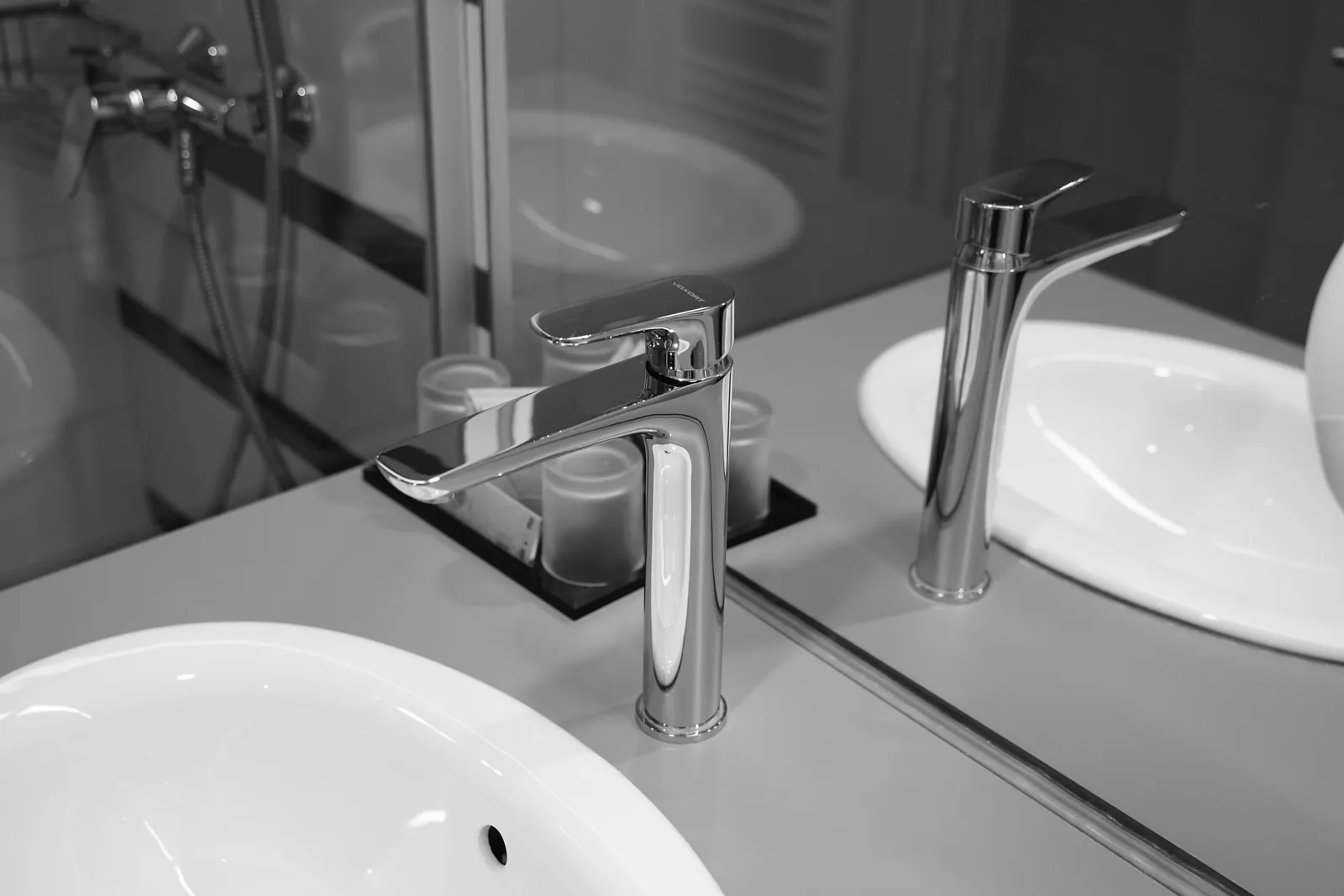
Every drain in the property is holding a few inches of standing water right now, and that water is the only thing between the room and the drain system underneath it. Nothing else in a standard fixture does that job — no valve, no flapper, no seal. When a coastal property closes up for a season, that water quietly evaporates, and the first thing the owner notices on the next visit is a smell they cannot place.
What a trap physically is, and why it is so easy to defeat
The bend under a sink is a P-trap: a U of pipe that stays full after the water above it has drained away. Waste passes through; the leftover water sits in the bend. That standing plug is the barrier. It works beautifully and it has exactly one failure mode, which is losing the water.
Three things take it. Evaporation, which is the seasonal one. Siphoning, when a big discharge elsewhere pulls the trap empty because the vent stack serving that fixture is not letting air in behind it. And displacement, when pressure in the system pushes the water out of the bend the other direction. The first is the one that matters in a property that sits empty, and the other two are the ones that explain why a trap sometimes goes dry in a property that does not.
The fixtures that lose their seal first are the ones nobody uses even when the place is occupied: the guest bathroom, the laundry standpipe behind the machine, a basement or utility floor drain, an outdoor shower, a wet bar sink. A primary bathroom used every visit is the last trap in the building to go dry and the last place anyone should look.
Why the peninsula makes this worse
Fort Morgan is the sharpest version of the problem in Baldwin County. Across the 36542 ZIP area that includes Fort Morgan, the Census counts 18,551 housing units against 7,947 occupied — the great majority of the doors out here belong to somebody who is not behind them today, and a large share of them are vacation rentals.
The stock is different too. Within about five kilometres of the Fort Morgan coordinate, OpenStreetMap maps no apartment buildings and two marinas or hotels: this is detached houses, duplexes and small buildings strung along the Fort Morgan Peninsula, not towers. That means no on-site building engineer, no maintenance staff walking a hallway, and nobody who happens to be next door on a Tuesday in January. A dry trap in a tower gets found because a neighbour smells it through a shared corridor. A dry trap on Mobile Point is found by whoever opens the door next, which might be a guest.
Distance is the other half. The drive from the Fairhope shop out here is 51.6 miles and about 81 minutes — the highest drive time from the Fairhope shop of the 22 communities Streamlined Plumbing serves. That does not change the plumbing, but it changes the economics of a wasted trip: the difference between "the traps went dry" and "something is wrong in the drain line" is worth establishing before anybody drives the peninsula, and most of that is establishable over the phone.
The peninsula also sits low. The USGS point elevation at the coordinate is 2.9 feet, the lowest ground elevation of the 22 communities Streamlined Plumbing serves, and FEMA maps coastal velocity zones nearby with base flood elevations from 8 to 18 feet in the surrounding query area. Low, salty, humid and empty is a combination that is hard on drain hardware in general, and it is worth walking a property with that in mind rather than only chasing a smell.
So what do I actually do when I open the place up?
Before you use any water, stand still and use your nose and ears. Then work the drains deliberately.
Run every fixture in the property, including the ones you never use. Not a splash — enough to refill the bend and carry off whatever settled in it. That means the guest bath sink, the guest tub, the shower nobody uses, the wet bar, the outdoor shower and every toilet.
Pour water directly down anything without a fixture over it. Laundry standpipes and floor drains have traps too, and nothing refills them unless somebody deliberately does. A pitcher or two per drain is the whole procedure.
Flush every toilet twice. The bowl itself is the trap, and a bowl that has evaporated down is both a smell source and a hint about how long the property has been closed.
Then wait a day and smell again. If the odour is gone, it was evaporation and you are finished. If it is not, stop refilling things and start diagnosing, because the water plug is no longer the variable.
When a smell is not a trap
A sewer odour that survives a full refill is telling you something structural about the drain system, and it is worth taking seriously in a property that is about to be occupied.
The usual suspects are a blocked or damaged vent, which stops air from following water and lets traps siphon themselves empty on normal use; a failed wax ring under a toilet, which lets gas past the base of the fixture rather than through the trap at all; a cracked trap arm or a failed joint inside a wall or floor, which also tends to show up as a damp spot before long; and a partial blockage further down the line holding waste where it can gas off.
Those are separable with a camera and a working knowledge of how the building is piped, and they are exactly what drain cleaning and camera work is for — including out on the peninsula, where a diagnosis over the phone saves an hour and a half each way. A persistent odour with no obvious source is also worth running through the sewage smell symptom page before you start pulling toilets. If the drain problem turns out to be in the line rather than at a fixture, that becomes sewer line repair territory.
The ownership question, stated plainly
Out here most properties are detached and it is all yours. In a shared building it is not, and which side of the line a specific drain falls on is written in that building's declaration and bylaws rather than in any general rule. Shared vertical stack, usually the building. Branch drain and fixtures inside the unit, usually the owner. Where your building draws it is a document question — read yours or ask the association which section defines it. Then you know before there is anything to argue about.
One last note that has nothing to do with smell. Fort Morgan is one of only 10 of the 22 communities Streamlined Plumbing serves with no registered municipal community water system, so what arrives at a fixture out here comes from a private well rather than through a utility's treatment step. That matters for what happens to the supply side of a property left standing for months, and it is a different article — but it is the same visit.
If the property is a rental with back-to-back bookings ahead of it, the companion piece on what turnover weekend does to a rental's plumbing covers the opposite failure mode, and if it is a unit in a stacked building, the anatomy of the four pipes explains which of them the drain in question actually is. We answer around the clock at (251) 423-7654.
Sources. Housing-unit and occupancy counts: US Census ACS 2023 5-year estimates, tables B25001 and B25003, for ZIP Code Tabulation Area 36542 — a ZIP-area figure covering the area that includes Fort Morgan, not a municipal figure. Ground elevation: USGS EPQS point query at the town coordinate. Drive distance and time: OSRM routing from 59 Morphy Ave, Fairhope. Flood-zone types and base flood elevations: FEMA National Flood Hazard Layer, area query around the coordinate — mapped nearby, not a municipal percentage. Absence of a registered community water system: EPA Safe Drinking Water Information System. Mapped building counts: OpenStreetMap via Overpass, about five kilometres each way around the coordinate. Occupancy percentages: Gulf Shores & Orange Beach Tourism, "Destination Growth Indicators," June 2026. Dried-out sanitary sewer drain traps as a hazard in buildings with low or no use: CDC, "Guidance for Building Water Systems."