
The Coldest Nights Arrive When the Beach Is at Its Emptiest
December vacation-rental occupancy bottoms near 20% along this coast, and the freeze window opens the same week. A burst line in a dark unit runs until somebody walks in.
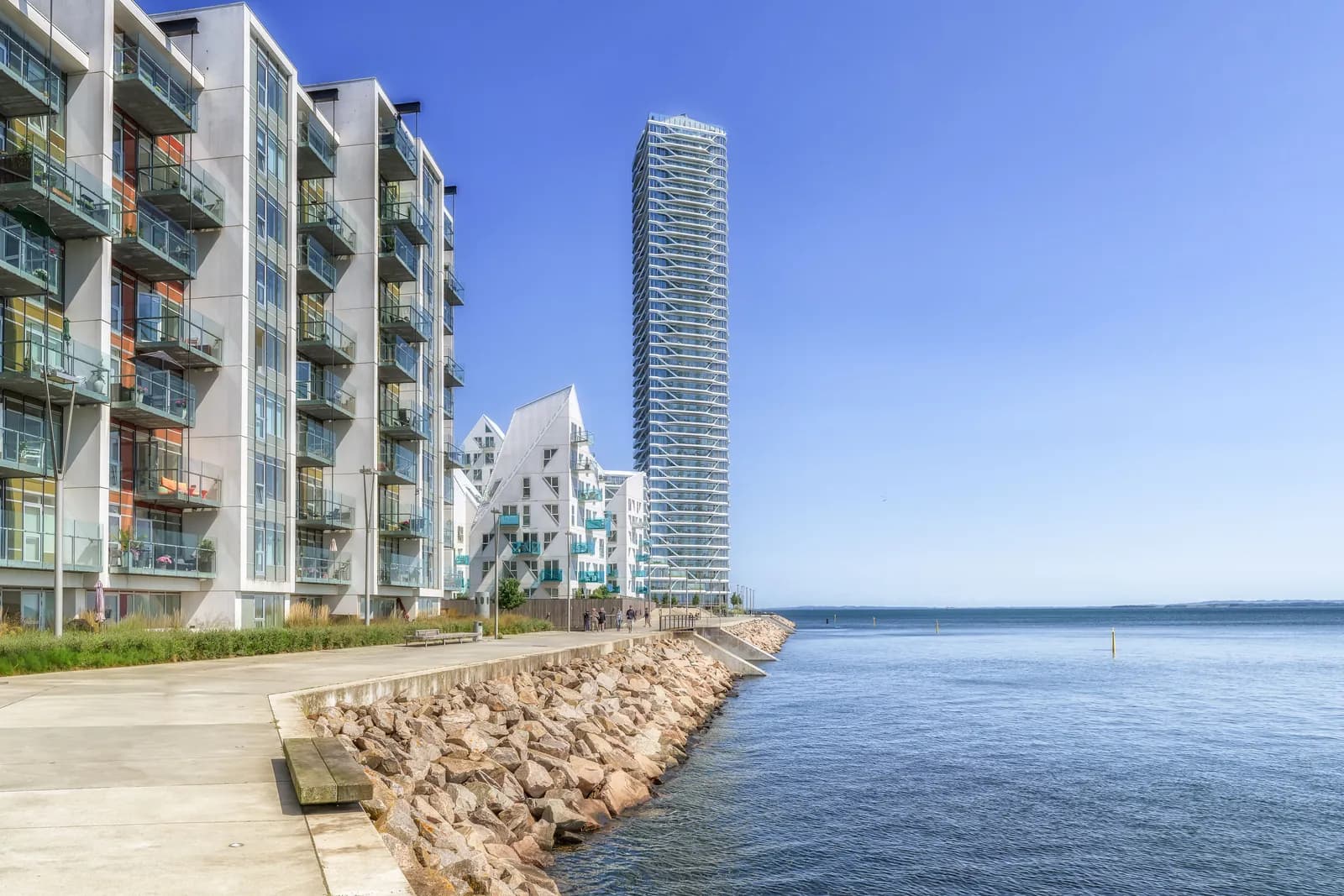
Along the Gulf Shores and Orange Beach corridor, vacation-rental occupancy bottoms out at somewhere between 17.1% and 22.5% in December. In July it runs 81.5% to 84.9%, and taxable lodging revenue swings roughly eight and a half to one between the two months. The freeze window on this coast opens around the first of December. So the season with the fewest people in the buildings and the season with the coldest nights are the same season — which is a Gulf Coast problem with no northern equivalent.
The northern version of winterizing assumes somebody is home. Here, the assumption fails.
Is a beachfront condo really at risk when it barely freezes there?
The beach genuinely is the mild end of this county. At the Orange Beach coordinate in calendar year 2025, 11 days fell to or below 32°F, five fell to or below 28°F, one fell to or below 20°F, and the coldest reading of the year was 16.4°F. Inland communities logged 17 and 18 days at or below freezing over the same year. If the only variable were temperature, the coast would be the safe place to own something.
Temperature is not the only variable. Duration of failure is, and it is the one nobody prices.
A supply line that opens in a house with people in it produces a noise, a pressure drop and a puddle, and somebody shuts the water off inside ten minutes. The same failure in a unit that nobody has walked into since Thanksgiving runs at line pressure for as long as it takes for a neighbour, a manager or a February guest to find it. In a stacked building it does not stay in one unit either — it goes down.
And the exposure here is enormous in raw counts. Census figures put Orange Beach at 15,075 total housing units against 3,931 occupied, and Gulf Shores at 14,668 against 7,262. Just under half of Orange Beach's entire housing stock and a third of Gulf Shores' is classified as vacant for seasonal, recreational or occasional use. The Orange Beach water system is registered to serve 17,796 people in a town whose resident population is 8,244.
What actually fails in an empty unit
The exposed run, wherever the building put it. Low-rise and mid-rise stock along Perdido Pass and out toward Ono Island frequently has supply lines through an attic space or an exterior chase, and towers have risers in unconditioned shafts. Neither is heated by the unit's thermostat. In a building where a third of the units are dark, the interior temperature of the whole floor is lower than the design assumption.
The water heater. A tank sitting in an unheated closet in an empty unit is a large volume of still water in the coldest part of the dwelling. It is also the appliance most likely to be twelve years old and never inspected, because the owner is here four weeks a year. If the heater fails while the unit is empty, it does not fail quietly — 40 or 50 gallons leaves the tank and then the supply keeps feeding it.
The traps, which are not a freeze problem but show up the same week. CDC lists dried-out sanitary sewer drain traps among the hazards of a building sitting unused. Every P-trap holds a plug of water that blocks sewer gas, and that water evaporates. Two months of a vacant unit is enough to empty the guest bath, the laundry standpipe and the shower nobody uses. The fix is a cup of water down every drain. If the smell persists a day later it is not a trap, and that is a drain and sewer question.
What to do before December, if you own one
Set the thermostat to a real number rather than to off. Fifty-five degrees across a cold snap costs very little and it is the single most effective thing an absent owner does.
Know which shutoff serves your unit alone, and know whether you can reach it. In a lot of buildings the unit isolation valve is in a hall closet or a chase behind an access panel, and if the answer is "the association has to call somebody," you want to have learned that in October.
Leave a key with someone who will actually go look — a manager, a neighbour who winters here, a family member down the road. This is the whole ballgame. Every one of the failures above is survivable if it is found in an hour and expensive if it is found in six weeks.
Get the exposed work looked at while the weather is pleasant. A hidden leak that has been weeping since last winter is much easier to find and fix in October than during an arctic outbreak, and leak detection is not a service anybody wants to buy in an emergency.
The riser question, answered honestly
In a stacked building, the pipe that failed is not automatically yours and not automatically the association's, and I am not going to pretend a blog post can tell you which. The general shape is that the vertical riser and the waste stack serve multiple units and belong to the building, while the branch line and the fixtures inside your walls belong to you — but where that boundary sits in your specific building is written in your declaration, and declarations differ.
Read yours, or ask the association to point you at the section. Then you will know before there is water on a floor whose insurance and whose plumber the situation calls for. What we can do either way is get the water off, find the failure and tell you exactly where it is — that part does not depend on the paperwork.
Once the water is stopped, the questions become the ordinary ones: whether the water heater is salvageable, how much line has to come out, and what got wet. We answer around the clock at (251) 423-7654 for emergency plumbing across the coast. Brandon Byrd, Alabama Master Plumber MP-4462.
Why the inland half of this county sees far more freeze nights than the beach is laid out in inland Baldwin County is colder than the beach, and the last time a hard freeze landed in the middle of a holiday week here is documented in the Christmas freeze of 2022. The seasonal checklist is on the freeze prep page.
Sources. Gulf Shores & Orange Beach Tourism, "Destination Growth Indicators," June 2026 — monthly vacation-rental and hotel occupancy and taxable lodging revenue; snowbird share of January and February occupancy via Gulf Shores & Orange Beach Tourism. Housing-unit, occupancy and seasonal-vacancy figures from Census ACS 2020–2024 5-year estimates, tables B25002 and B25004, at place level. Population served from the EPA SDWIS drinking-water registry. CDC, "Guidance for Building Water Systems," on dried-out sanitary sewer drain traps. Freeze-day counts and minimum temperatures: per-coordinate ERA5-Land daily reanalysis via the Open-Meteo archive, calendar year 2025 — one year of measurement, not a climate normal.