
The Valve You Can't Reach: Shutting Water Off in a Condo at 2 a.m.
A house has one shutoff and you own it. A stacked building has four, and two of them are behind a door you don't have a key to. What that means when a line opens overnight.
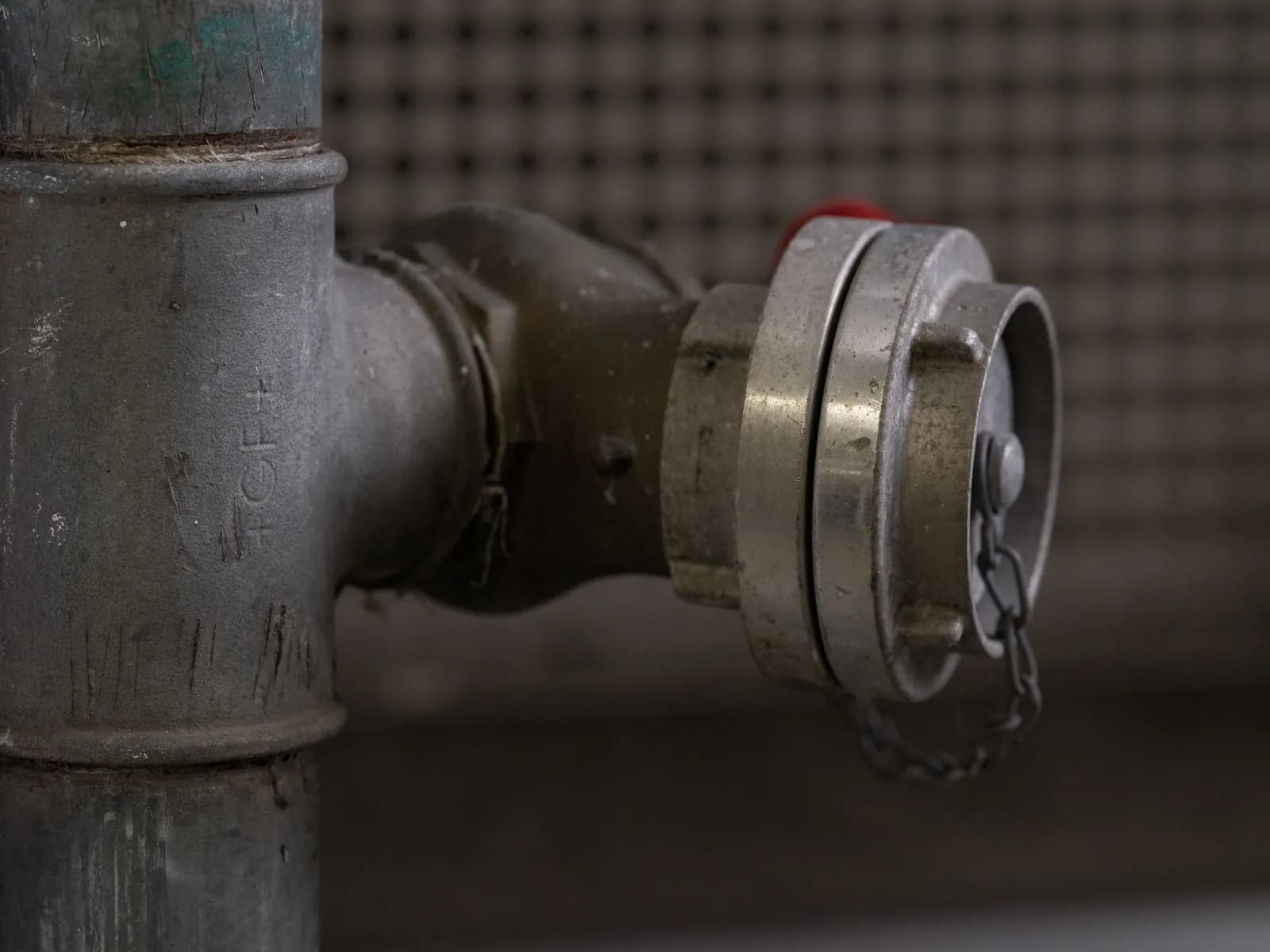
In a single-family house the answer is simple: one shutoff, usually at the front of the house or in a box near the street, and you own everything downstream of it. In a stacked building there are four valves between the street and a running fixture, they belong to different parties, and the two that stop the most water are the two you are least likely to be able to reach at two in the morning. That is not a design flaw. It is what shared plumbing is.
The four valves, from the street inward
The utility's valve. Somewhere between the main under the road and the building there is a service connection and a meter, and the utility controls that side of it. In Orange Beach, the EPA's drinking-water registry lists Orange Beach Water Sewer and F.P.A., PWSID AL0000053, as the active community system — a groundwater system registered to serve 17,796 people in a town whose resident population is 8,244. Elsewhere in the county the name on the account might be the Utilities Board of the City of Gulf Shores, Riviera Utilities or Baldwin County Sewer Service. What none of those names tells you is where that company's responsibility physically stops at your address. That boundary lives in the utility's own service rules, and one phone call to the number on your statement settles it permanently.
The building's main. Inside the structure, downstream of whatever the utility maintains, the piping becomes the building's. In a master-metered building — common in stacked coastal construction — there is one feed for the whole structure and no separate meter for your unit at all. Closing the utility's valve on a building like that takes water from every unit in it, which is why "have the city shut it off" is rarely the answer people expect it to be.
The riser isolation valve. Vertical supply lines usually have isolation valves at intervals rather than at every floor. Closing one drops the units above and below you in the same vertical line. This valve is essentially never inside a unit.
Your unit's isolation valve, and then your angle stops. The valve that takes water from your unit alone is frequently in a hall closet, a mechanical alcove or a chase behind an access panel — outside the unit, because the branch line taps the riser outside the unit. Past that, each fixture has its own angle stop, and those are the only valves in the whole chain that are unambiguously within arm's reach.
Which valve should I actually go for?
Work from the smallest one that will do the job, because every step up costs somebody else their water.
If water is coming from a fixture — under a sink, behind a toilet, at a supply hose — close that fixture's angle stop. Turn it clockwise, slowly, and stop when it stops. A stop that has not been moved in twenty years will sometimes weep at the packing nut once it finally turns; that is a repair, not a disaster, and it beats the alternative.
If water is coming from inside a wall, a ceiling or the floor assembly and no fixture explains it, your angle stops will not help. Go for the unit isolation valve. This is the moment the answer is either "it is in the closet by the door" or "I have no idea," and which of those you say is decided months earlier.
If water is arriving from above, or several units in your vertical line are affected, stop looking for a valve you control. That is a riser or a stack, the valve is in the shaft, and the useful action is reaching whoever holds building access while somebody starts tracing it. Meanwhile, get anything valuable off the floor and out from under the ceiling.
What makes this harder in a seasonal building
Three things, all of them local.
The first is simple absence. Around Perdido Pass, Terry Cove and Cotton Bayou, and out toward Ono Island, a large share of units are used a few weeks a year, which is the whole reason after-hours plumbing in Orange Beach is a different proposition from after-hours plumbing inland. A failure at 2 a.m. in an occupied unit is a five-minute event. The same failure behind a locked door with nobody in the state runs until a neighbour, a manager or a February guest walks into it.
The second is that valves seize when nothing moves them. A quarter-turn ball valve exercised twice a year will still work in year fifteen. The same valve untouched since the building was finished frequently will not, and the median Orange Beach housing unit dates from 2000. Turning every stop in your unit once a season is unglamorous and it is the single highest-value thing an absentee owner does with ten minutes.
The third is that in a stacked building water only travels one direction. Whatever opens on your floor lands on the floors beneath it, through ceiling assemblies, light cans and duct penetrations, and the people it lands on are usually not the people whose pipe failed.
Where the ownership question fits
Once water is off, the next question is whose pipe it was, and that one is answered by your building's declaration and bylaws rather than by any general rule. Shared vertical pipe usually belongs to the building; the branch and the fixtures inside a unit usually belong to the owner. Where your building actually draws it is written in your documents, and they differ. Read yours, or ask the association which section defines the boundary.
None of that changes the plumbing work. Isolating the failure, finding which pipe opened and telling you precisely where it is happens the same way regardless of who eventually pays for it — and it has to happen first, because nobody can settle an ownership question about a pipe that has not been located yet. We answer around the clock at (251) 423-7654 for emergency plumbing across the coast, and leak detection is the part that turns a wet ceiling into an address on a pipe.
The ten minutes that make the difference
Before the unit goes quiet for a season, walk it once. Find and label the unit isolation valve, and if it is outside the unit, find out who has access to that space and how they are reached after hours. Turn every angle stop closed and open again. Look at the braided supply hoses behind toilets and under sinks for rust at the crimp — those are inexpensive and they fail wet. Note which units are directly above and below yours. Leave the information with whoever will actually go look at the property, because a key held by somebody two hours away is not a plan.
The rest of the seasonal picture is in the companion pieces: the anatomy of the four pipes covers what you are isolating and why, and what happens to a dry P-trap over a coastal off-season covers the drain-side failure that shows up in the same week for the same reason. Symptoms that do not obviously point anywhere are worth running through the plumbing symptom checker before you start opening panels.
Sources. Housing-unit, occupancy, owner-occupancy and median-year-built figures: US Census ACS 2023 5-year estimates, tables B25001, B25003 and B25035, at place level, via api.census.gov. Water system name, PWSID, source type and population served: EPA Safe Drinking Water Information System, active community water systems for Alabama, via data.epa.gov. Comparative owner-occupancy ranking across the 22 communities served: internal rankings table built from the 2026-08-01 data snapshot. Utility names are given as examples of accounts that appear in this county; each utility's own service rules define what it maintains at a given address.