
Can You Shut Off Your Own Water at the Meter? What Baldwin County Utilities Publish
One Baldwin County utility publishes an explicit emergency exception for closing the meter valve. The others publish nothing either way. What that means at 2 a.m., and the fix that ends the question.
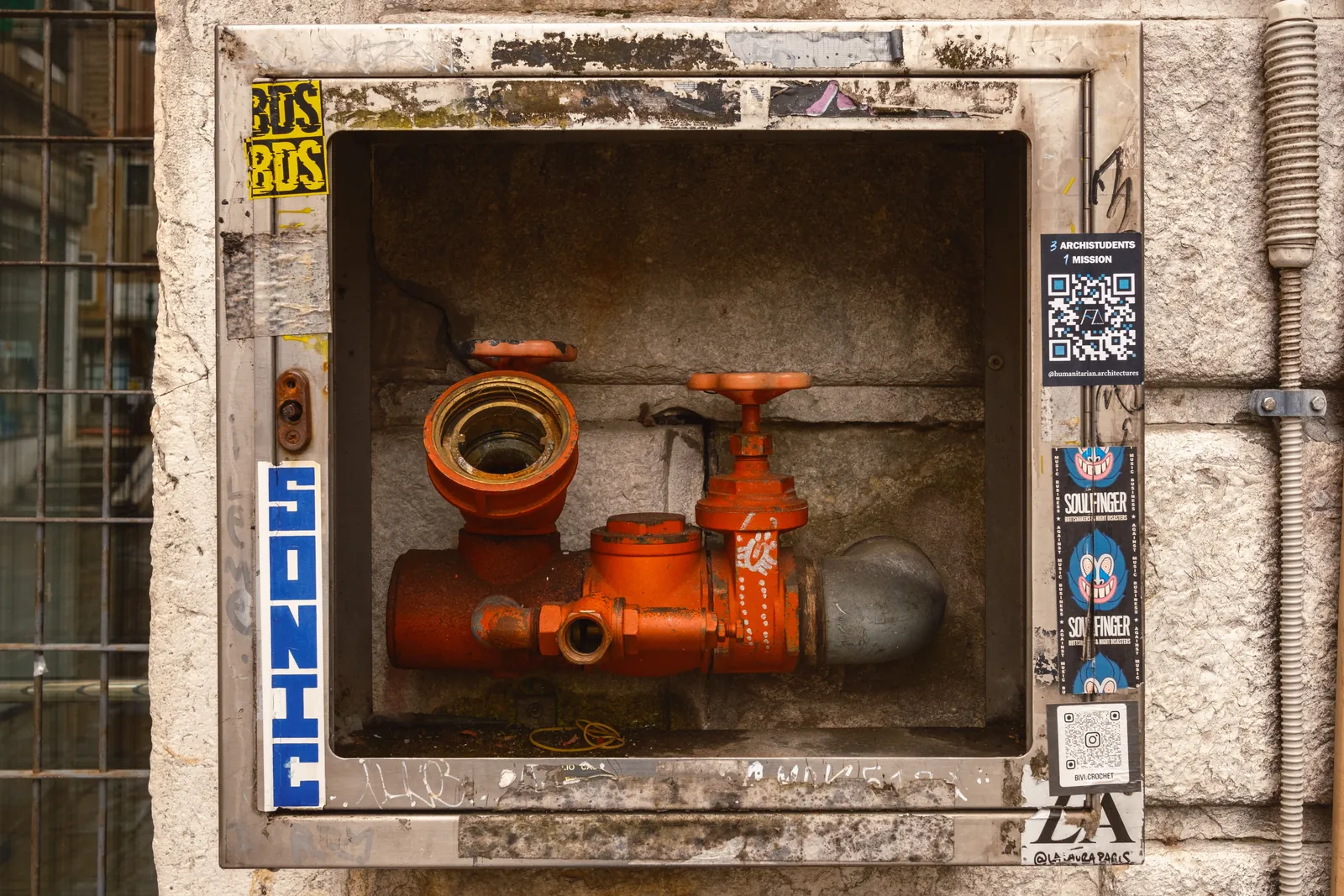
Only one Baldwin County water provider I could find answers this in writing. Riviera Utilities defines tampering in its published policy manual and then, in the same sentence, excludes "turning off the valve associated with the water meter for the purpose of temporary disconnection of service due to an emergency." Gulf Shores, Daphne and Fairhope publish no equivalent permission and no equivalent prohibition. That silence is the practical problem, and it has a practical fix that has nothing to do with the meter.
Riviera Utilities: an explicit exception, in the definitions
Riviera's water department policy manual puts the answer somewhere most people would never look — the definitions section, not the rules section.
Tampering is defined there as "any willful alterations or interference with the fire hydrant, water meter, meter seal, locks, or other system components belonging to Riviera, except for turning off the valve associated with the water meter for the purpose of temporary disconnection of service due to an emergency."
The exception is written into the definition itself, which is stronger than an exception added later as a courtesy. Closing that valve during an emergency is not tampering under Riviera's own rules, because the definition says it is not.
The same sentence continues: "Tampering includes turning on said valve for the purpose of obtaining water service to premises not subject to a Contract for Service with the present owner or occupants." Off in an emergency is carved out. On, to get service you are not contracted for, is named.
One honest wrinkle. Elsewhere the manual states that any tampering with Riviera's mains, valves, hydrants, service yokes, meters or other system components is prohibited. That reads like a flat ban until you remember that tampering is a defined term in this document, and the definition already excludes the emergency shut-off. Consistent, but you have to read both halves. Riviera's territory covers Foley and much of south Baldwin. A burst line in a rental off Hwy 59 and one in an older place out toward Bon Secour are the same emergency, and on this system they get the same published answer.
Gulf Shores Utilities: tampering rules, but not this question
The Gulf Shores utilities board publishes a rates and procedures handbook, and it has plenty to say about meters — none of it on point.
Its adjustment section opens with the principle that "any and all usage beyond the meter is the sole responsibility of the customer." Elsewhere it lists "Tampering with the usage meter or using unauthorized devices or methods to obtain service" among the grounds for terminating service, states that Alabama law makes it a felony to unlawfully obtain or tamper with utility services, and reserves the right to permanently refuse service to any customer who tampers with a meter or other measuring device.
Read those together and the target is clear: obtaining service unlawfully. Nothing in that language is aimed at a homeowner closing a valve to stop a flood. But nothing in it grants permission either. The handbook simply does not address the case, and I am not going to convert its silence into a yes on a public page. If you are on this system — Gulf Shores and the Fort Morgan peninsula east of the Range 3 East line, per the handbook's own zone definitions — the number to have is the utility's, and it is worth having before the night you need it.
Daphne, Fairhope, and the rest
I could find no published position from Daphne Utilities or Fairhope Public Utilities on whether a customer may operate the meter valve. Same for Spanish Fort Water System, North Baldwin Utilities and Orange Beach Water Authority.
That is not an accusation. Most utilities in the country do not publish this, because the question sits between a plumbing code, a service contract and common sense, and none of those documents is the utility's website.
What it means for you is unglamorous: the answer for your address is a phone call, and the time to make it is a Tuesday afternoon, not during a failure. Ask two things. Whether they permit a customer to close the meter valve in an emergency, and what number to call after you do. Write down the answer and the name of the person who gave it to you.
What happens if the valve will not turn?
Frequently it will not, and that is the part nobody plans for.
A valve sitting in a damp concrete box in Gulf Coast sand for fifteen or twenty years does not stay free. It seizes. The tab or handle that operates it corrodes thin. Meanwhile the box has filled with sand, fire ants, or water you now have to reach through in the dark with a flashlight in your teeth.
Some meter valves are quarter-turn ball valves with a flat tab — perpendicular to the pipe is closed. Some are angle-pattern valves that need a purpose-made meter key. What none of them respond well to is a pair of pliers and body weight. Shearing a stem or cracking a fitting inside the utility's box replaces your controlled emergency with an uncontrolled one on the wrong side of the meter, plus a damage conversation with the utility. Steady pressure, or stop and call.
There is also a category of leak where the meter valve is the wrong tool entirely. If the failure is upstream of the meter, closing it does nothing. If you are in a mid-rise on the beach, the meter is not even the relevant device — building risers and unit isolation valves are, and that is a separate anatomy covered in shutting off water in an Orange Beach condo.
Where this honestly ends: your own valve
Every paragraph above is a workaround for a missing part.
The correct answer to "how do I stop the water right now" is a full-port ball valve on your side of the meter, above ground, reachable in the dark, that everyone in the household knows the location of. A main shutoff valve that belongs to you, that you are unambiguously entitled to operate, that no utility policy has any opinion about.
Three things make one actually work when it matters:
It has to be the right valve. Old gate valves seize and then snap the stem when someone finally forces them. A full-port ball valve turns a quarter and is either open or shut.
It has to be reachable. A valve behind stored boxes in a crawl space is a valve you will not reach in time. Somewhere you can get to it wet, in the dark, in a hurry.
It has to get exercised. Once a year, all the way off and all the way back on. A valve that has never moved is a valve you are guessing about, and freeze season is a bad time to find out — the triage sequence after a burst is in after the freeze, burst pipe triage, and the pre-departure version is in shutting a house down before evacuating.
Installing one is a small, contained job. On a slab house it usually goes where the supply comes up and enters the building; it is ordinary water line repair work, done once, and it removes this entire question from your life permanently.
Two things to do while the water is off
Photograph everything before any repair starts — the failure itself, the wet, the meter face. Those photographs are what a leak bill adjustment and an insurance claim both end up asking for, and no one can produce them afterwards. What the county's utilities each require in that file is set out in the Baldwin County leak adjustment policies reference.
And tell the utility you closed the valve, if you did. A meter reading nothing when it should be reading something looks like one thing from the office and another thing from your kitchen, and a phone call settles it.
If it is running now and you cannot stop it, that is emergency plumbing and it is what the number below is for. (251) 423-7654, any hour. Brandon Byrd, Alabama Master Plumber MP-4462, Fairhope.
Sources. The definition of tampering, the emergency shut-off exception, the turning-on clause and the general prohibition on tampering with mains, valves, hydrants, service yokes and meters: Riviera Utilities Water Department Policy Manual, May 1, 2024, definitions and §3, rivierautilities.com/pdf/water-policy-manual-2024-05.pdf. "Any and all usage beyond the meter is the sole responsibility of the customer" (§12), tampering with the usage meter as grounds for termination (§19), the felony statement (§1), permanent refusal of service for meter tampering (§20), and the Zone I definition including the Fort Morgan Peninsula east of the western boundary of Range 3 East (§2): The Utilities Board of the City of Gulf Shores, Rates and Procedures Handbook, May 2026, gulfshoresutilities.com. The absence of a published position from Daphne Utilities (daphneutilities.com), Fairhope Public Utilities (fairhopeal.gov), Spanish Fort Water System (spanishfortwater.com), North Baldwin Utilities (northbaldwinutilities.com) and Orange Beach Water Authority (obwaterauthority.com) is a statement about those public records as of this writing, not about what those utilities would say if asked. Policies change; confirm with your own provider.