
Daphne Utilities Adjusts the Sewer Charge, Not the Water — and Why That Still Matters
Daphne's leak adjustment covers the sewer portion only, even when the leak is real. Why the water side stays whole, what that does to the size of the credit, and what the documentation rule asks for.
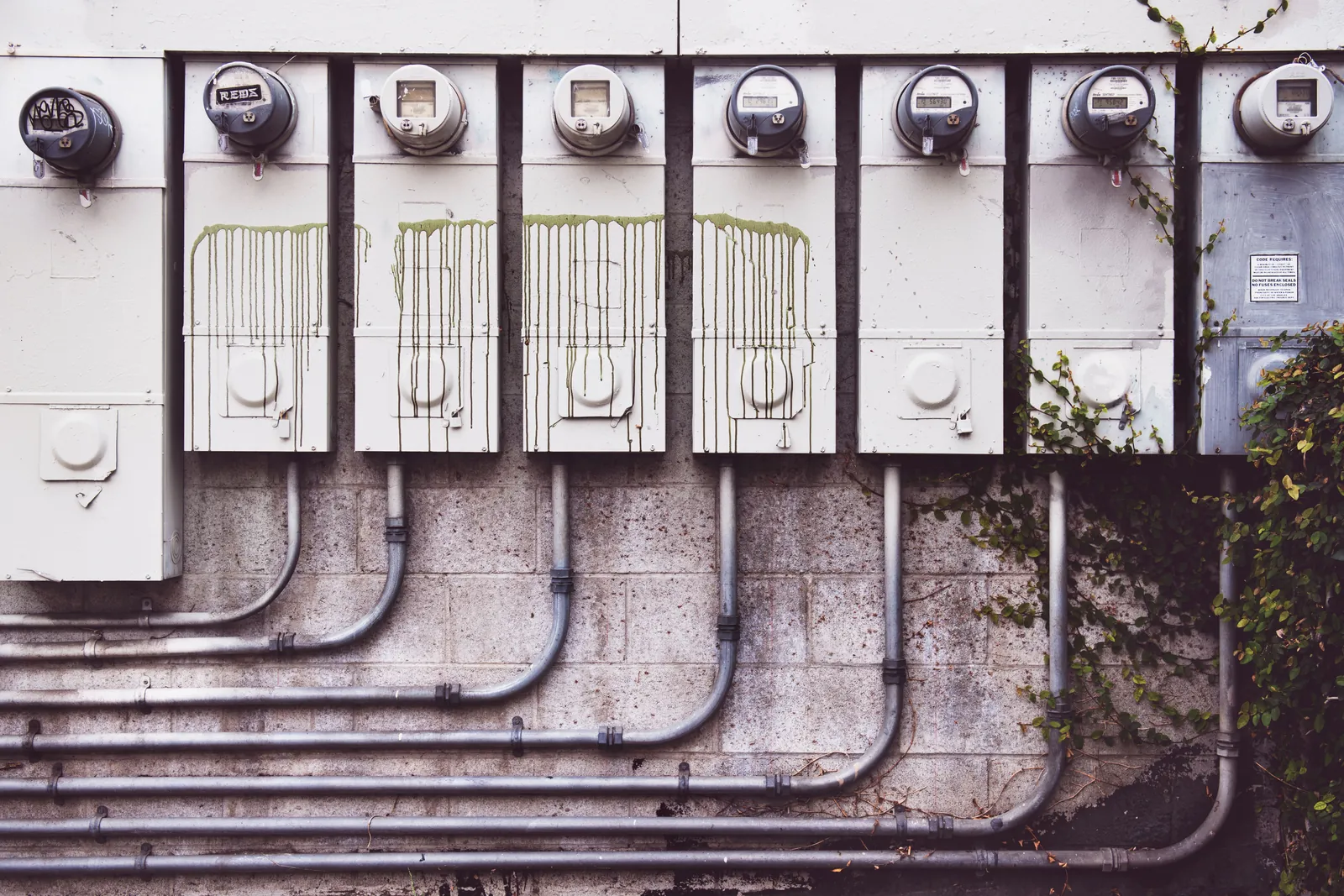
Daphne Utilities publishes a leak adjustment process, and one line on it decides most of what follows: "ONLY the sewer charge portion of your bill will be adjusted." The page names water and irrigation among the services that do not qualify and says they stay the account holder's responsibility. That is a rule about scope, not a verdict on your leak — a real, documented, properly repaired leak still leaves the water line item exactly as billed.
Why would a real leak not get the water charge adjusted?
Because the two halves of the bill are answering different questions, and only one of them has any give in it.
The water charge is a measurement. A meter counted volume that passed through it, and every gallon of that volume was delivered — pumped, treated, pushed through mains and into your service line. The utility incurred that cost whether the water ended up in a shower or in the sand under a driveway. There is no accounting sense in which the delivery did not happen.
The sewer charge is an estimate. Nothing meters what leaves a house. The volume you are billed for on the sewer side is inferred from the volume that came in through the water meter, on the ordinary assumption that most of what enters a building eventually leaves it through the drain. A supply-side leak breaks that assumption completely: the water left the pipe underground and never went near the treatment plant.
So the sewer charge on a leak month is billing you for a service that provably was not rendered, and the water charge is billing you for one that was. Daphne's policy is drawn along exactly that line. Whatever you think of where it lands, it is internally consistent, and it explains why arguing that the leak was genuine will not move the water half — nobody at the utility disputes that the leak was genuine.
What sewer-only does to the size of the credit
This is where people assume they are being handed the smaller half, and on Daphne's published rates that assumption is usually backwards.
Daphne's current residential schedule prices both services in units of 1,000 gallons. Inside the city limits, each additional unit above the minimum allowance runs $3.45 for water and $6.88 for sewer. Outside the city limits the published figures are $4.10 and $8.11. In both cases the sewer rate per unit is roughly double the water rate per unit.
There is no separate sewer meter on a house anywhere on the Gulf Coast. The unit count driving that sewer charge comes off the water meter, which is precisely why one underground leak inflates two line items on a single statement — and why the line item it inflates harder is the one Daphne is willing to look at.
A leak that added a large number of units to a month, then, added them at both rates. The adjustment addresses the more expensive of the two. That is not a token.
What it is not is total relief. The water charge stands, and on a bad month the water charge alone can be a serious number. Plan on paying it, and let the sewer credit be the part that improves the outcome rather than the part that rescues it.
What the documentation requirement is actually asking
"All adjustments MUST have supporting documentation where a repair was performed, such as a receipt or plumber's invoice."
The load-bearing word in that sentence is performed. It is not asking you to establish that a leak existed. It is asking you to establish that the leak is over. A photograph of a wet yard, a meter reading, an estimate for work not yet done — none of those, on their own, answer the question the form is asking.
The form fills in the rest of the picture. It asks for the date the leak was repaired and a description of the problem and the repair. It provides an upload field for the receipt. It handles a pool fill separately, with its own start and end dates and an approximate pool size in gallons, so a pool-fill claim does not get processed as a leak. And it carries a certification that everything submitted is factual under penalty of law — a sentence worth reading slowly before you round a date off in your favour.
Practically, an invoice that satisfies this cleanly says four things: the service address, the date the work was done, what was found, and what was repaired. "Plumbing repair" as a lone line item is a weaker document than "located and repaired leaking 3/4-inch supply line under the driveway." Ask for the detail while the plumber is still standing there; it is far harder to add later.
The frequency limit is the part to take seriously
One adjustment per twelve months. The page describes it as a one-time, annual leak adjustment and states that only one can be made within a 12 month period.
That single allowance is an argument for doing the repair properly rather than quickly. A hidden leak that gets patched at the one spot where it surfaced, on a line that has been failing along its length, will reappear — and the second bill arrives with the year's adjustment already spent. That is true whether the line runs under a Lake Forest slab, through the older stock in Olde Towne Daphne down toward Mobile Bay, or out along Hwy 181. Where that calculation tips from repair toward replacing the run is a judgement call, and it is one worth making before the first repair, not after the second.
If the leak is under the slab, the finding matters even more, because a slab line is not somewhere you want to open twice: how a slab leak is located covers what pinpointing looks like. If it is on the buried run between the meter and the building, that is water line repair. And if the culprit turns out to be a toilet that never stopped filling — the most common cause of a mystifying bill anywhere — that is toilet repair, and the meter test that identifies it is in the high-bill, no-visible-leak walkthrough.
The order to do this in
Confirm flow at the meter with the house shut down. Get the leak located before anything is dug or opened — leak detection exists so that the excavation happens in one place instead of three. Photograph the leak while it is open. Get the repair done and get an invoice that describes it. Then file on Daphne's own form with the receipt attached, and keep paying the account while it is under review.
Nothing here says the utility will grant an adjustment. Their policy, their decision. What you control is whether your file arrives complete, inside the allowance, describing a repair that actually happened.
Local work on this system is on the Daphne service page, and the leak side specifically is Daphne leak detection.
(251) 423-7654, any hour. Brandon Byrd, Alabama Master Plumber MP-4462, Fairhope.
Sources. Scope ("ONLY the sewer charge portion of your bill will be adjusted"), the excluded services, the one-adjustment-per-12-months limit, the documentation requirement, the repair-date and description fields, the receipt upload, the pool-fill fields, the certification under penalty of law and the 10-business-day processing statement: Daphne Utilities, Apply for Leak Adjustment, daphneutilities.com/leak-adjustment-form/. Residential per-unit rates of $3.45 water and $6.88 sewer inside the city limits, $4.10 and $8.11 outside, with units measured in increments of 1,000 gallons: Daphne Utilities, Current Water and Sewer Rates, daphneutilities.com/current-water-and-sewer-rates/. Riviera Utilities' opposite treatment and the 10,000-gallon single-family sewer cap: Riviera Utilities Water Department Policy Manual, May 1, 2024, §4.7, rivierautilities.com/pdf/water-policy-manual-2024-05.pdf. Rates and policies are set by the utility and change; check the current pages before relying on a figure here. The reading of why a sewer charge is inferred from metered water volume is mine, not a quotation from the utility.