Cast Iron Drain Pipe in Older Baldwin County Houses: How It Fails, and in What Order
Cast iron drain pipe does not fail all at once. It scales, then graphitizes, then channels along the bottom, then perforates — and each stage looks like a different plumbing problem. What that sequence means in north Baldwin County housing stock.
Cast iron drain pipe does not fail the way people expect. It does not spring a leak one afternoon in an otherwise perfect system. It deteriorates through four stages that each present as a completely different household complaint, and homeowners routinely pay to solve stage two three separate times before anyone tells them they are looking at stage three.
Here is the sequence, and what each stage looks like from inside the house.
Stage one: the bore narrows
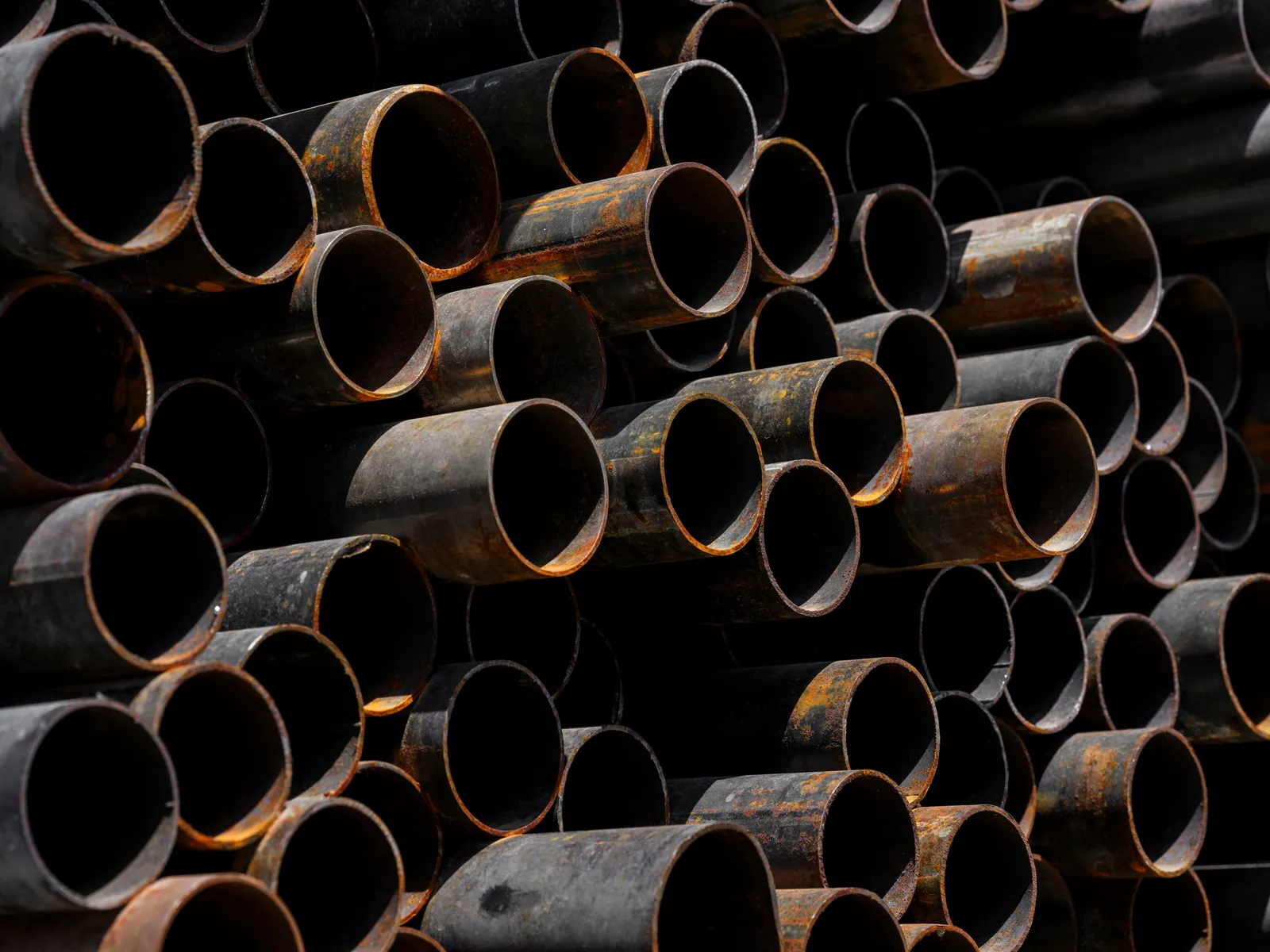
Cast iron rusts from the inside, where the water is. The rust does not fall away — it builds up as a rough, layered scale that grows inward from the pipe wall and takes up room the wastewater used to have.
Nothing is broken at this stage. The line simply carries less than it did. A house that handled a shower and a washing machine at once for forty years starts to gurgle when you try it. A tub takes an extra minute to clear. Somebody runs a cable through it, the cable punches a passage through the softest part of the buildup, and the drain works properly for a while — which is exactly why this stage gets misread as a series of unrelated clogs.
The tell is repetition without an obvious cause. A slow drain that returns on a schedule, in a house old enough to have cast iron, is usually not catching anything. It is running out of pipe.
Stage two: graphitization
Cast iron is iron with graphite through it. As the iron corrodes away, the graphite structure stays behind — so the pipe keeps its shape and its outward appearance while losing the strength that made it pipe. Tap a graphitized section and it sounds wrong. Put a screwdriver through it and it goes through.
This is the stage that makes cast iron dangerous to work on carelessly, and it is the reason the order of operations matters. A line in this condition can look completely intact on the outside of a crawlspace run and be structurally gone.
Stage three: channeling
Wastewater runs along the bottom of a drain line, so that is where the wear concentrates. Over decades the corrosion cuts a channel along the invert — the bottom of the bore — and the pipe ends up thin along the strip that does all the work and comparatively sound around the top.
A channelled line still drains. It drains badly, it catches solids in the rough channel, and it is one soil movement away from a break. On camera it is unmistakable and it is one of the few findings that reliably converts an argument about repair-versus-replace into an easy conversation.
Stage four: perforation and collapse
The channel goes through. Now you have water leaving the pipe into whatever is around it, and around it in most Baldwin County construction is either soil under a slab or the ground under a crawlspace.
At this point the symptom set changes completely: a backed-up main line, damp that has no source above it, soil settling, or a smell that comes and goes. Anything that has reached this stage is a replacement of at least the affected section, and that is sewer line service work.
Why north Baldwin County is where this lands hardest
Bay Minette has the lowest median year built of the 22 communities Streamlined Plumbing serves — 1976, across 3,407 housing units — and it also has the lowest median home value of the 20 communities Streamlined Plumbing serves and the lowest owner-occupancy rate of the 21 communities Streamlined Plumbing serves. Read those three together and you get the profile that produces stage-three cast iron: older stock, a higher share of rental tenure, and less capital cycling into invisible infrastructure than into things a tenant can see.
The elevation is the other half of the story and it cuts the other way. At 271 feet, Bay Minette sits at the highest ground elevation of the 22 communities Streamlined Plumbing serves — 271 feet against a 100-foot median across those communities, and against 2.9 feet at Fort Morgan. Ground that high off Mobile Bay gives a drain line something the coastal communities have to engineer for: fall. A line with genuine gravity behind it scours itself better and tolerates a narrowed bore longer than a nearly flat one does, which is one reason the same-age house on the Highway 31 corridor and the same-age house near the water do not present identically.
What that elevation does not tell you is anything about where your responsibility for the line ends. The records behind everything on this site are EPA drinking-water records. They contain no wastewater information at all, and none will be inferred from them.
How do you find out which stage your house is at?
Three things, in order, and none of them is expensive.
Find the cleanout and confirm it is accessible. In houses of this age it is frequently buried under thirty years of landscaping, and locating it is the difference between a straightforward camera run and a much longer visit.
Get a camera down it once. Not on a schedule — once, to establish what you actually own. The output is a map: which sections are scaled, which are channelled, which are fine. Most houses of this vintage have a mix, and the specific twelve feet that are the problem is the finding that keeps a replacement from becoming a whole-house project.
Then match the tool to the finding. Scale responds to one thing, a blockage to another, and putting the wrong one down a compromised line is how a drain problem becomes a dig — that comparison is worked through in hydro jetting versus snaking, and routine care is ordinary drain cleaning. What the range depends on is set out in the sewer line repair cost guide.
One last thing worth saying about houses in this era. A house with cast iron drains very often has galvanized or early copper supply pipe on the other side of the same wall, put in by the same crew in the same year. If the drains are telling you their age, it is worth knowing what the supply side is made of before you finish the ceiling back up — that is whole-home repipe territory, and finding out costs nothing. Damp with no visible source is leak detection work either way. (251) 423-7654, any hour. Brandon Byrd, Alabama Master Plumber MP-4462.
Sources. ASTM A74, Standard Specification for Cast Iron Soil Pipe and Fittings; ASTM A888 and CISPI 301, hubless cast iron soil pipe and fittings. Baldwin County Commission Resolution No. 2025-067, March 5, 2025, adopting the 2024 International Plumbing Code and 2024 International Residential Code. Median year built, median home value, owner-occupancy rate and housing-unit counts from Census ACS 2023 5-year estimates at place level. Ground elevations from the USGS 3DEP point query service (epqs.nationalmap.gov) at each community coordinate.