
A Toy Went Down the Toilet. You Almost Certainly Don't Need a New One.
A closet auger and a drain snake are not the same tool, and using the second one on china is how a retrievable toy turns into a cracked bowl. Here is how to tell where the toy actually stopped.
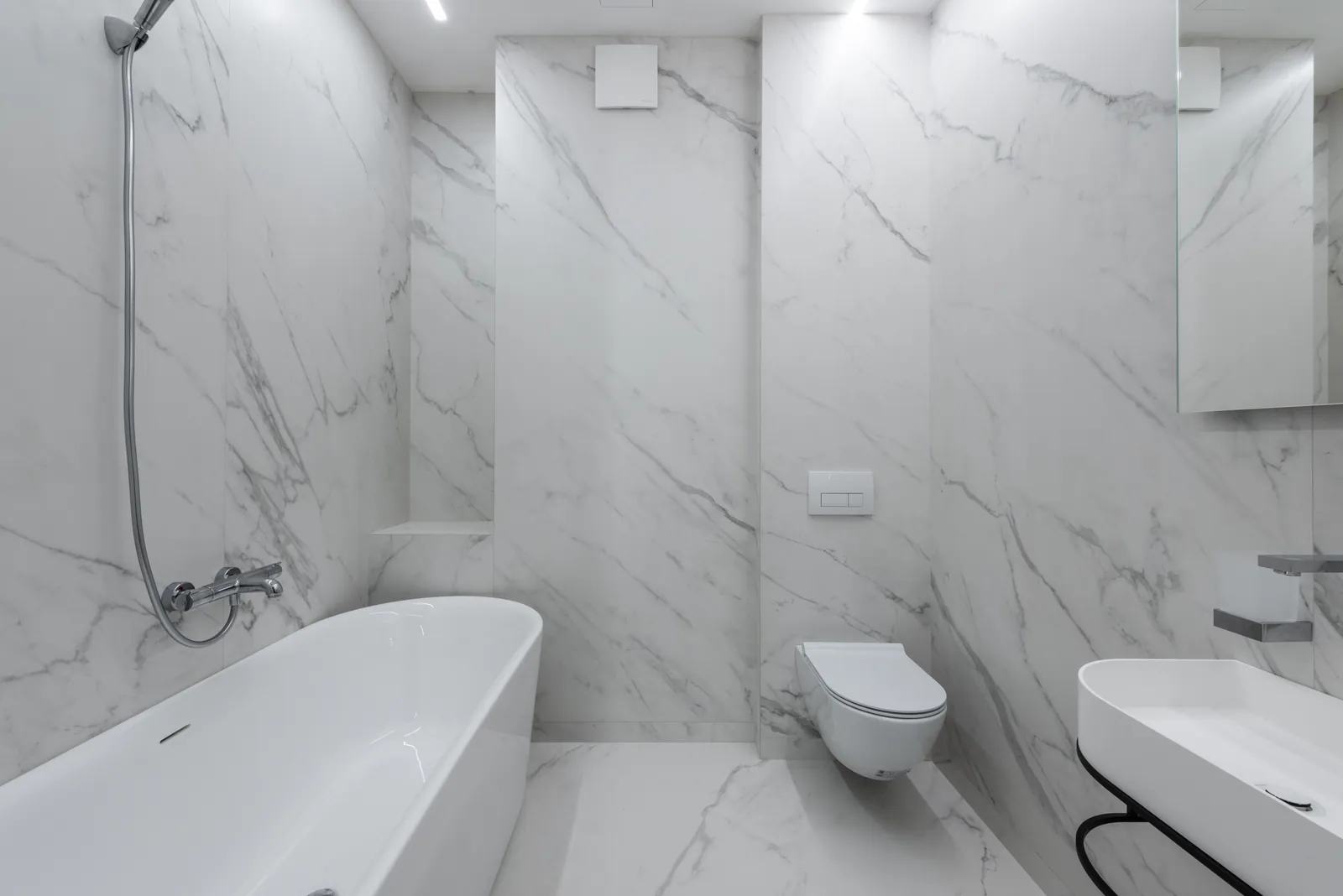
Usually the toilet is fine. A flushed toy almost always stops inside the trapway — the curved passage moulded into the china between the bowl and the outlet — and it stays there because that passage is deliberately narrow and turns upward before it turns down. The question is not whether the toilet is ruined. It is which of two tools gets the toy back out, and one of those tools will crack the bowl if you pick it by mistake.
Where the toy actually is
A toilet is not a hole over a pipe. Between the bottom of the bowl and the outlet at the floor there is a moulded S-shaped channel that rises before it falls, and it is what holds the standing water you can see in the bowl. That water seals the room off from the drainage system, the same job the P-trap does under a sink.
The channel is the narrowest point in the entire drainage path of the house. Every fitting downstream of it is wider. That is a deliberate piece of design and it is doing you a favour right now: whatever went in has a good chance of having stopped at the first tight turn, three or four inches from the bowl surface, rather than travelling on into pipe you cannot see.
The tell is behavioural. A toilet with something lodged in the trapway will often still flush — weakly, slowly, refilling to an odd level, sometimes fine one time and terrible the next, depending on how the object has shifted. A toilet with nothing in its trapway and a real blockage further down does not do that. It backs up consistently and it brings the fixtures near it into the story.
Is a toilet auger the same thing as a drain snake?
No, and this is where the china gets broken.
A closet auger is short — a few feet, not fifty. It has a fixed bend at the working end shaped to follow a trapway, and the tube is sleeved in plastic or vinyl so that no bare metal ever touches the bowl. You set the bend into the outlet at the bottom of the bowl, crank, and the head travels the arc the trapway already describes. It is designed to run out of reach quickly, because past the toilet is not its job.
A drain snake or auger on a drum is the opposite animal. It is a long bare steel cable meant to be driven into pipe for a considerable distance, with no sleeve, no fixed bend and no idea where it is. Feed it into a toilet and two things happen. On the way in, the exposed cable drags across the glaze inside the bowl and leaves grey scoring that does not come off. On the way round, the cable wants to go straight while the trapway does not, so it loads up and springs against the wall of the channel. Vitreous china is hard, brittle and unforgiving of a point load. It does not dent. It chips, and sometimes it cracks.
When the toilet has to come off the floor
Sometimes an auger cannot get a grip. Smooth plastic, a rounded shape, something wedged rather than resting — the head goes past it or slides off it, and after a few honest attempts more cranking is just more risk to the china.
That is when the toilet comes off, and it is worth being precise about what that means, because the phrase alarms people. The water is shut off at the fixture stop, the tank drained and the supply line disconnected, the two closet bolts at the floor removed, and the toilet lifted straight up and laid on its side on a towel. The outlet is then open to the air, and most objects that would not come out from above come out from below in under a minute, because you can see them and reach them.
Then it goes back down. New wax ring, a look at the closet flange it seats on while the flange is visible, fresh bolts, and a level reset. That is a pull-and-reset, not a replacement, and the same toilet you have owned for ten years is the toilet you keep. It is also the moment to catch a flange that has been corroding or has broken an ear, which is toilet repair work worth doing while it is exposed rather than the next time somebody notices the toilet rocking.
What if it is already past the toilet?
Then it is a drain problem rather than a toilet problem, and the diagnosis has to move with it.
Past the outlet the object is in the branch line, running at a slope toward a shared line, and it will stop at the first place the slope stops carrying it — normally a change of direction. A camera inspection is the honest first step at that point, because it tells you what the object is, where it is and whether it is actually blocking anything. Some things sit in the bottom of a line for years and cause nothing. Others catch paper and become a backed-up main line six weeks later.
Recovery from there is drain cleaning or sewer line service depending on how far it went and what the camera finds. What it is not is another hour with a plunger.
The Baldwin County part of this
Two local realities change the odds here, and they pull in opposite directions.
The first is who is doing the flushing. The inland communities skew markedly younger than the county's coastal and retirement towns — Silverhill's median age is 35.3, Loxley's and Stapleton's 37.2, Spanish Fort's 37.3, against 53.3 in Foley and 49.8 in Elberta. Those first four are family housing, and family housing is where toys meet toilets. It is not a plumbing fact, it is a demographic one, and it is why this call comes from Silverhill and Loxley more than it comes from the beach.
The second is what the waste line does after the toilet. A great deal of low-lying and waterfront property in Baldwin County does not drain by gravity to a main. It drains into a tank with a grinder pump in it, which macerates waste and pushes it under pressure into a small-diameter line. A hard plastic object that reaches a grinder pump is a genuinely different problem from the same object sitting in a gravity line, because the pump has cutting components and the object was not designed to be cut. If your house is on a grinder system and something solid has gone past the toilet, say so when you call — it changes the urgency and it changes what we bring.
What to check before you call
Flush once and watch, then stop. One flush tells you whether it is weak-but-complete, or not going anywhere. A second and third flush on a blocked bowl only puts water on the floor.
Run the tub or shower nearest that toilet for thirty seconds. Quiet and normal means the problem is in the fixture. Gurgling, bubbling or slow drainage means it is downstream, and the toilet is the messenger rather than the patient.
Ask the child what it was, without making it a trial. Size and material matter more than anything else you can tell us: a die-cast car, a foam letter, a rubber duck and a plastic bottle cap all behave differently, and one of them floats and re-blocks after it seems to have cleared.
And do not put a chemical down it. It will not touch a solid object, and it makes the next person's job hazardous.
(251) 423-7654, any hour. Brandon Byrd, Alabama Master Plumber MP-4462.
Sources. Median age by place from Census ACS 2023 5-year estimates (table B01002) for Silverhill, Loxley, Stapleton, Spanish Fort, Foley and Elberta.